



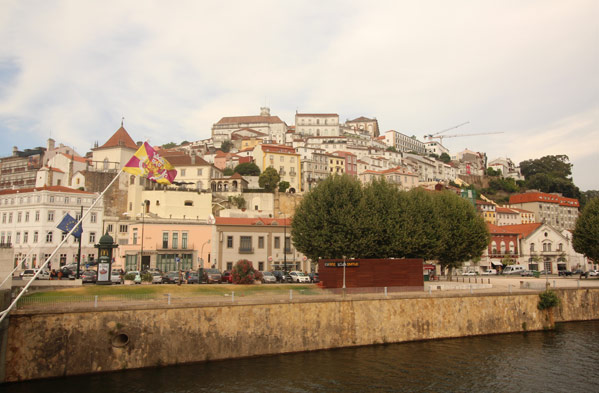


There are cities in which one has no doubt where to start. Coimbra is one of them. Its renowned university, elevated on a hill next to the Mondego River, permeates the Portuguese city with knowledge since medieval times. Coimbra is a pyramid of knowledge that, instead of lava, It has spit for centuries a relentless magma of letters and numbers on the town, to the point of having molded its idiosyncrasy and converting it, a few years ago, In Unesco World Heritage. In Coimbra, university spirit is breathed. In Coimbra, Everything starts at your university.
We headed for the station to the station. In just an hour of travel from Port (If the tickets are bought online a round trip can leave for just over twenty euros: https://www.cp.pt/passageiros/pt) We have planted at the station Coimbra B, from which, with the same ticket, You have to take another train to coimbra to, A step away from the city center.
Coimbra is a pyramid of knowledge that, instead of lava, Escupe for centuries an incessant magma of letters and numbers
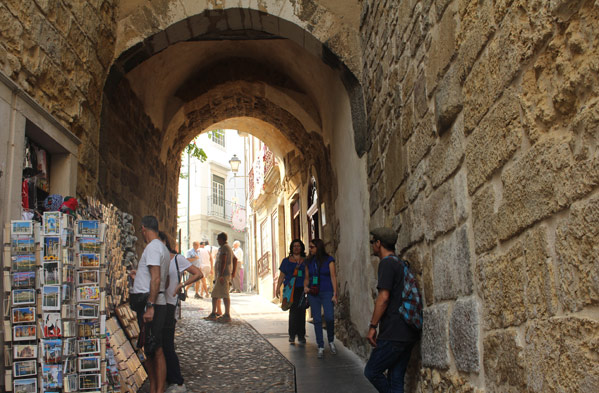
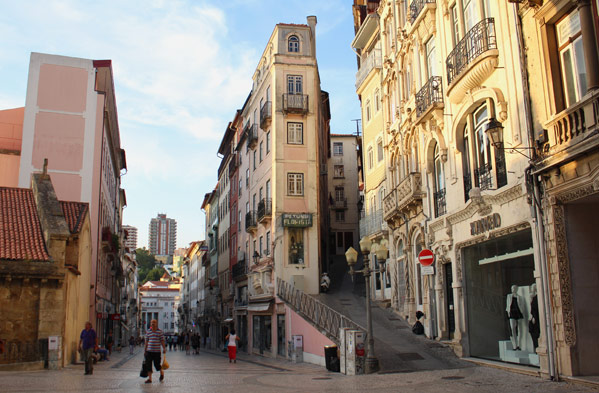
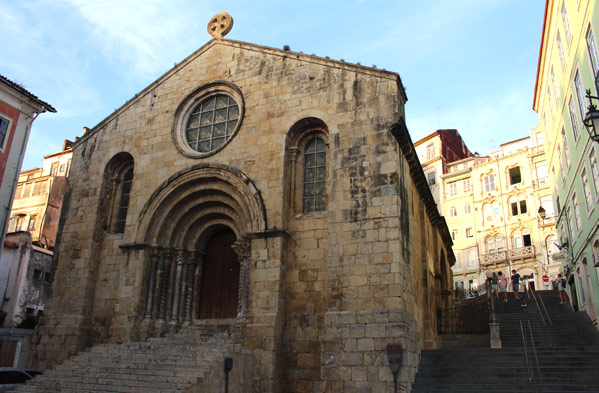
To get to university you just have to climb intuitively. Surely we will go to the Commerce Square and, Staircases above leaving aside the Santiago Church, to the arc of Almedina Tower, vestige of the old walls and that is the main access to the old town. They are steep corners (The name of the street, Rua Breaks Costas, It is a declaration of intentions) With great charm, Staircases dotted with craft stores, Tascas and restaurants, and adorned from side to side with crochet multicolored rugets, Because these days a crochet contest is held here.
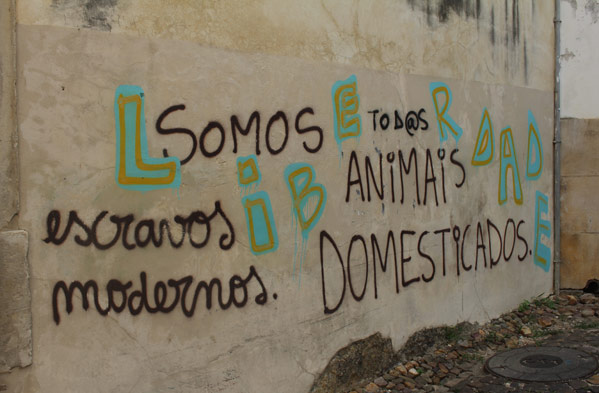
Culture also suits nonconformism and as we approach the university enclosure, chaining rus and intricate long, The vindictive and anti -system painted proliferate, Some with existentialist aroma. "We are all domesticated animals", Reza unifies that cries 'freedom'. I will not be the one who takes the opposite.
We have to do 45 Cola minutes to buy tickets to the old university city (The Cuesta Ticket 12 EUR, To those to add another one to climb to the tower). Heat is suffocating and the meager shadow is a gift during the endless wait, Until we finally cross the iron door walking on the shield of the University of Coimbra, The Minerva goddess holding an open book, symbol of that knowledge that crowns the city from 1290.
Culture also suits nonconformism and as we approach the university, the vindictive painted proliferate
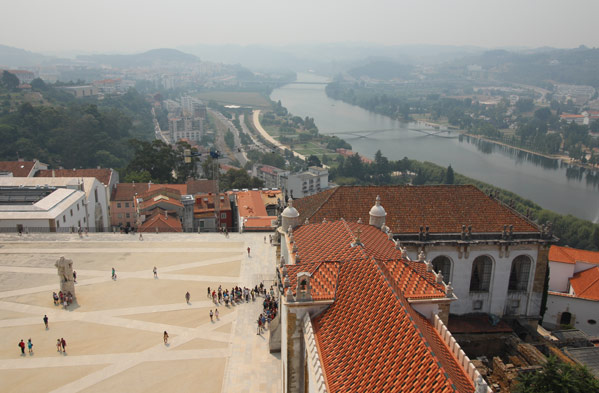
About the ancient Arab Alcazaba, Then the Royal Palace where the first Portuguese sovereigns were born, The now extends Patio de las Schools, that at this time refulge in sun as an immense white pan. Around, monitored by the modern statue of Juan III, The main milestones of the university complex are distributed: the Capilla de San Miguel, With its beautiful tiles and its baroque organ; The tower that houses the bells of the university, and what after 184 steps, really narrow in the end, offers the most beautiful views of Coimbra; and Capelos room, where the portraits of all the Portuguese kings hang except those of the Spaniards Felipe II (I of Portugal), Felipe III y Felipe IV, A disdain that erases from a stroke 60 Years of the history of Portugal.
But the most shocking visit is, certainly, that of the Biblioteca Juanina, which is done in groups to try to preserve the conservation of its near 60.000 volumes. Waiting for our turn, We take a snack at the university bar, Where meals also serve. Inside the old bookstore house (where photographs are prohibited) Culture permeates everything. For a book lover, There can be no more fascinating place than this, with its polychrome wooden shelves full of books throughout its three rooms, completed with a canvas with the portrait of Juan V.
For a book lover there can be no more fascinating place than the Juanina Library
This armored camera of knowledge-the two meters thick of its walls guarantee a constant temperature of 19-20º-, It has invaluable allies in the conservation of books. A colony of bats inhabits it and is responsible for keeping the main enemies of the paper at bay: The moths. In the evenings, yes, You have to cover the tables of the library with leather blankets to leave them safe from the drop -up droppings.
Down stairs you can travel the deposit where the most restricted access books were stored. Some of them are now exposed in showcases. During the 16th century, The library was public and opened two hours in the morning and two in the afternoon in winter, And six hours during the summer. The 150 Books available to the library were facilitated to students in a closed or chained closet. How far were the times of photocopies. Just below is the old academic prison, And before medieval cell, where the students fulfilled the sanctions for their faults of discipline. At present it is the library's souvenir shop.
A bat of bats inhabits the library and keeps the moths at bay
Here he studied, Without going any further, The Spanish Jesuit Pedro Páez (renamed but Paes by the Portuguese) Before embarking for Goa, in India, and Ethiopia, Where it would become, in 1618, In the first European to see with his own eyes the sources of the blue Nile in Gish Abay. I seek without success among the shelves some footprint of his monumental "History of Ethiopia", written in Portuguese, But there are scarce volumes that are in view of the visitor in this somewhat lean exhibition taking into account the bibliographic wealth that the Juanina library treasures.
Again under the relentless sun, We walk through the long rua to the Praça de D. Dinis, where you have to turn left in the direction of the Science Museum, Very entertaining for children, and the school of Jesus, in whose university restaurant, by buffet, We eat in extremis a menu of 6,50 euros nothing worth remembering. Best, The green vinho in a bucket that we consume with the avidity of a shipwrecked.
In the new cathedral, a dust does not pray to Our Lady of the Good Death
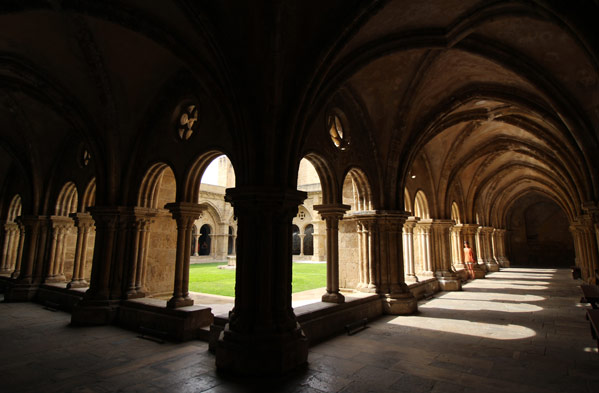
Now it's time to go down to the river, but not before taking refuge from the sun in New See, The new cathedral, Where does not pray a dust to Our Lady of the Good Death, a yacent statue of the Virgin located to the left of the main altar. After, We continue downhill to The old woman knows, Raised in the twelfth century on the ruins of a Visigoth temple by order of the first Portuguese, Alfonso Enriquez. At the gates of the cathedral, that houses a beautiful cloister (two and a half euros the entrance) that we must not miss, We are assaulted by students with bunks who ask for help to cover their career trip (that traditionally celebrate with the "Queima des Fitas"). I don't doubt a moment. To avoid ending up singing a serenade I quickly lengthen a one -euro coin.
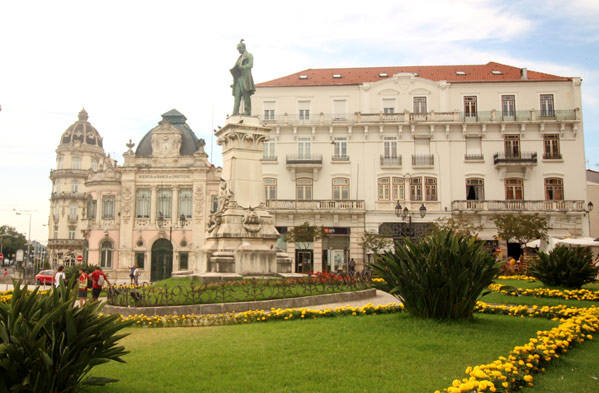
We continue to descend for Rua on Ribas, But at the height of the Torre de Anto we have no choice but to turn because the street is in works. The obstacle raffled, The downhill takes us, After passing the arc of the Almedina tower, until the Rua Ferreira Borges, Coimbra Preciados Street, A succession of shops that leads to the river and the Santa Clara bridge, in what is undoubtedly the most lively walk in the city. Shortly before reaching the square, Few can resist the suggestive shop window of the Briosa Briosa.
LA RUA FERREIRA BORGES, Coimbra Preciados Street, It is undoubtedly the most lively walk in the city
To the left of Santa Clara bridge The dock is located from which tourist ships leave. The walk to the other shore of the Mondego is justified by the most recurring photography of Coimbra, By the convent of Santa Clara, the Quinta das Tegreas -That witnessed, in the fourteenth century, of the furtive love of infant Don Pedro with Inés de Castro, which was finally killed in its gardens, They say that by order of King Alfonso IV, infant's father, that did not approve the relationship- and the theme park Portugal of the small, A scale reproduction of the main architectural milestones of Portugal and its old colonies. And although my steps take me to the fifth, seduced by the tragic history of that impossible love, The cultural ration is already covered by today and it is the children who decide to finish off the day in the playground (25, 95 euros the family pack).
Traced his curiosity, We arrive at the train station at half past eight in the afternoon. Although there is a taxi stop that allows Coimbra B to be in a jiffy, We prefer to travel by train. Those who repeat the experience are warned that the frequency at this time is low. We got on a train to Aveiro to the 20:43, But for the next one you have to wait an hour. Once in Coimbra B, We entertain the wait with some beers at the station bar. At half past nine at night we return to Porto again on a train, as to the first leg, With wifi connection.


