The Colombian Caribbean is not a sea, you don't need water. Gabriel García Márquez said: “On this continent of Latin America there is a country that is not land, but of water, What is the Caribbean?. And to me, the Caribbean seems to have started when I crossed some wetlands, and the sky was cleaned of dust, and the high mountains were left behind and the sea was still far away. I saw it in some faces that were not expecting anything by the road, and in two palm trees, and in what I felt like I smelled guava in a place where you could only smell truck exhaust.. I must be near Macondo, thought, and then I arrived in Santa Cruz de Mompox.
It wasn't hot but the sun hurt even when you were in the shade. “Mompox does not exist. Sometimes we dream about her, but it doesn't exist", says Simón Bolívar in García Márquez's work “The General in his Labyrinth”. For us Mompox is divided into two: the sky and the Magdalena river. Both seem dry in this season in which nothing remains wet and the wind waits still. Gabo's work is stamped from that place.
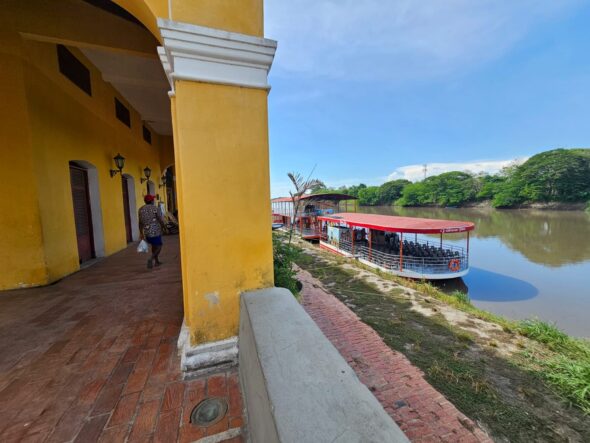
Then I noticed a barge. One of those ships that crossed Colombia, from the sea to the depths of the mountains, and it is a memory that has been in my memory for years without having seen it. “Era inevitable: “The smell of bitter almonds always reminded him of the fate of crossed loves.”, begins “Love in the time of cholera”.
It is the story of an impossible love that ends with a couple getting on that boat that I had in front of me.: “And how long do you think we can continue in this damn coming and going?”?, He asked him. Florentino Ariza had the answer prepared for fifty-three years, seven months, and eleven days and nights. –Lifetime -said." This is how the work ends, with them finally entrenched from the world above the coming and going of the waters.
We got on that barge with the doubt of dismantling a myth. We were two foreigners and twelve Colombians.. I lay down in a hammock and started looking at the flow. Some men were fighting to get a motorcycle off a boat and up an embankment. A heron wet its knees. Some fishermen were throwing their nets into a river from which nothing seemed to flow anymore.. And then Macondo was scattered among the old planks of the boat.

They talked to each other. a family, all from the town of El Banco, They spoke to us not as if they knew us, but with the certainty of wanting to do it. “Sometimes the ship would run aground for up to fifteen days on a sandbank.. “No one cared because the party continued.”, Márquez remembers in his biography “Living to Tell It” of his journeys as a teenager on his way to Bogotá through Magdalena..
“Play music my child, "This looks like a wake.", Then a blue-eyed woman from Medellin shouted., viral laughter, and voice and thick hips. We all end up dancing, without paying attention to the birds or the chores of the riverside residents. The world was all washed away, without anything else fitting, on a ship in which everything was already possible.
“What do you think of García Márquez? That's why I came here.", I ask my fellow partygoers.. “A genius. But there are many people who don't appreciate him because it bothers them that he didn't want to live here again.", Esteban tells me, neighbor of the nearby town of El Banco.

Being a prophet in your land is complicated, thought. “What happens is that I stopped worrying about that a long time ago because… there was a time when it was considered a betrayal not to live in Colombia.”, and I always had an answer: wherever I am in the world, I am writing a Colombian novel. Because I am also so refractory that I have the impression about what all the trips and all the places I've been, they have not influenced me to change at all. I am as raw as when I was in Aracataca”, Gabo said in an interview.
My Colombian friends, The country has the ability to make five-minute friends that you will never see again., they liked vallenato, their songs and their idols that stayed there, in that land, sharing stages and taverns. “One Hundred Years of Solitude is nothing more than a vallenato of three hundred and fifty pages”, García Márquez once explained.
We get off the ship with friendship intact, iron and brand new for the rest of our lives, what a luxury it is to travel to places where that happens, and we discovered that Mompox is just as beautiful at night as it is during the day. Its lanterns illuminate colorful facades, the barred windows are emboldened and open without fear of the heatwave, and the Magdalena remained still behind a river walk between arcades and the remains of a time dead in life. Mompox has an Andalusian plaza and church, where the film “Chronicle of a Death Foretold” was filmed, and a border that divides two worlds. Because colonial Mompox is two blocks and behind it grows an ugly city that the tourist ignores..

The tourist ignores that, or caricatures it as his own scar. Gabo decorated it to deceive the reader. “Mompox does not exist”, I think like Simón Bolívar when we leave that fabulous town without wanting to leave.
Macondo was already very close. A few hours by car and a road block. Near the village of Las Tinas, a vehicle traveling at high speed killed a child that morning. A death that repeats itself, shout the inhabitants of the skinny shacks that surround the accident site, while they carry threatening machetes and place logs on the asphalt. They demand that the mayor come, Let the authorities come and free them from so many corpses., and they kidnap dozens of stranded cars for hours in their rage. no one arrives, and it is negotiated that we pass the vehicles ten by ten in order of arrival. We are in the first quota and we say goodbye paying 10.000 Colombian pesos (3 EUR) biting, and throwing a “luck” to the angry eyes of people who decipher a word that does not belong to them. “In this time, Justice is not done with papers, “It is done with shots.”, wrote García Márquez in “La Mala Hora”.
Finally we arrived at Aracataca. We discovered that Macondo is a hornet's nest of motorcycles inside an oven. It's not hot because the heat doesn't allow anything to be done there at that time.. “Macondo was already a terrifying whirlwind of dust and debris centrifuged by the wrath of the biblical hurricane”, It is the last direct reference that García Márquez makes of him before he disappears forever.

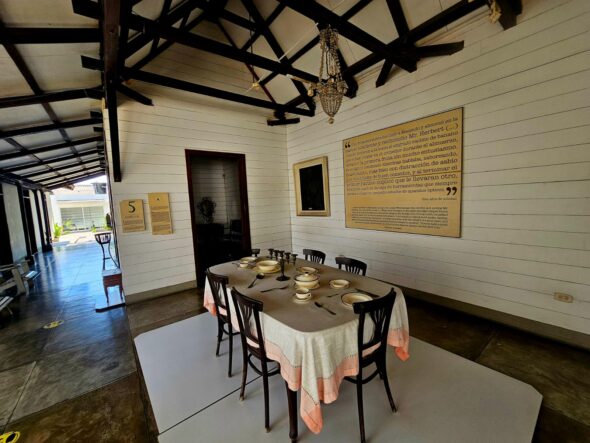
We park in front of the grandparents' house where Gabo was born., Macondo's house, today a museum. I carry the book I wrote eleven years ago, The African Macondo, to donate it to where it belongs. My book talks about Africa, and the certainty I had there that Macondo is, as Gabo says, “a state of mind that allows one to see what one wants to see.”, and see it how you want”. I put the book down with some shame., with the feeling that I contribute something very small to something very big. Macondo is the homeland of letters. And there, before its size, we are all a voyeur.
Chat with Donald Ramos, visitor manager. He knows Gabo's work so well, One Hundred Years of Solitude is so well known, who gives me sentences and I discover that a book I read several times I should read again. He fights against the forgetfulness of that whole world that is shaking out there and for which Macondo is just the building for visits.. “Today the generation that is being formed will know that Aracataca is Macondo. We teach children that Aracataca is García Márquez. But perhaps if you ask ten people today if they perceive that Aracataca is Macondo, they will not give you a correct answer.”, recognizes me.
“The people had visualized it when I returned to Aracataca with my mother (…) I decided to call him by the name I undoubtedly knew as a child, but whose magical charge had not been revealed to me until then: “Macondo”, Gabo wrote. Macondo was the name of a plantation that he saw from the train.
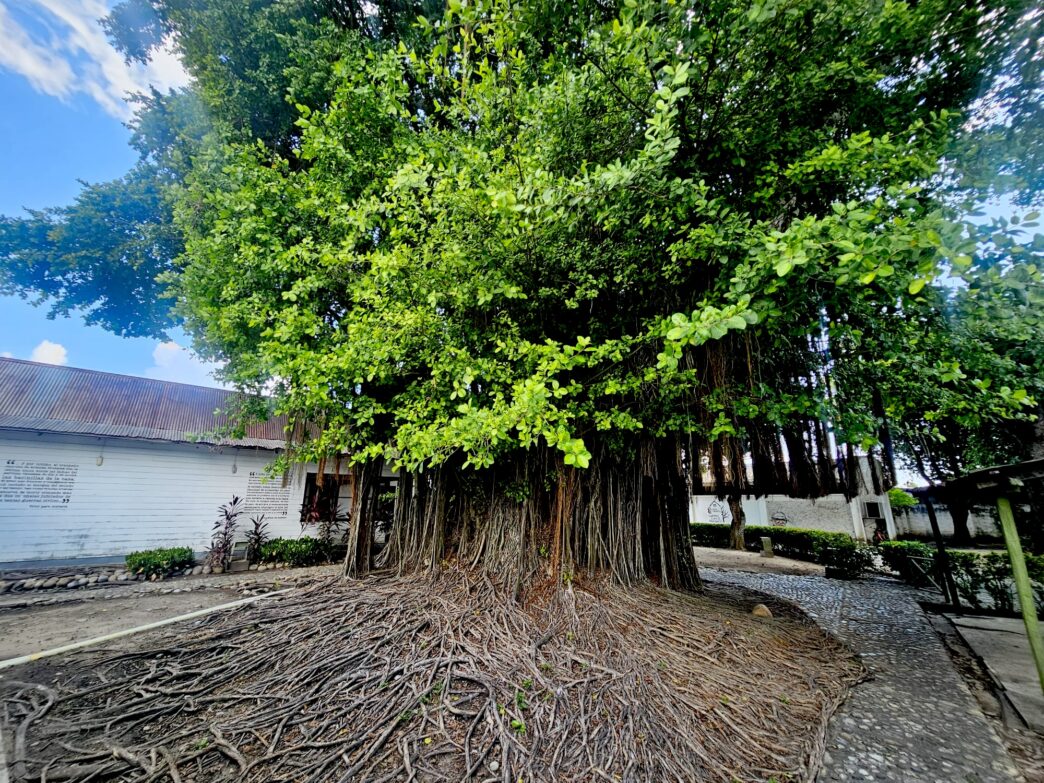
Inside the house museum there is an immense ficus in the center. García Márquez was not lying, looked. the tree, a chestnut in the text, in which José Arcadio Buendía ended up tied up with his mind gone, and in which Aureliano Babilonia deciphers the scrolls of the gypsy Melquiades, It is the symbol of the end of the work.
“The first of the line is tied to a tree and the last one is being eaten by ants.”, says the prophecy of a manuscript that ends like this: "However, Before reaching the final verse I had already understood that I would never leave that room., because it was planned that the city of mirrors (or mirages) It would be destroyed by the wind and banished from the memory of men the moment Aureliano Babilonia finished deciphering the scrolls., and that everything written in them was unrepeatable forever and ever., because the races condemned to a hundred years of solitude did not have a second chance on earth”.
We leave the house, We walked to the telegrapher's house and the offices of the United Fruit Company; We cross with our car in front of the old train station, through which the banana went and arrived, and we can't resist the temptation to get off and walk along its old platform.
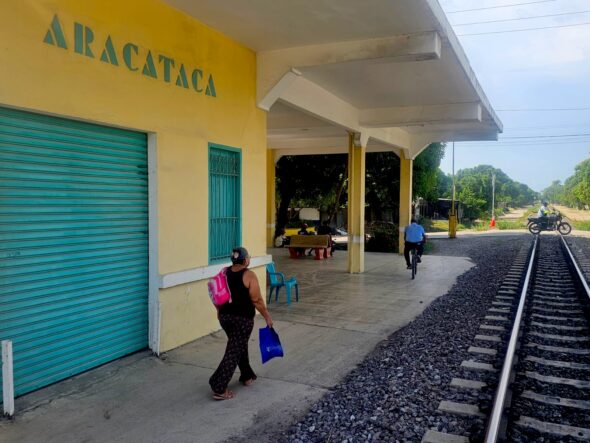
We returned to our car. sitting there, behind another long line of trucks that were to take us to Santa Marta first and days later to Cartagena de Indias, I put on some music and smiled. I was in Macondo. And I understood that all that universe that I had gone through those days was just a trip down memory lane..
And I remembered with sadness the anecdote that Gabo's son tells, Rodrigo García Barcha, in the book “Gabo and Mercedes: “a farewell”, in which he narrates that his father, already old and with Alzheimer's, I looked through “One Hundred Years of Solitude” with surprise and fascination and asked them: who wrote that?