
Every book can be summarized in 6 paragraphs….
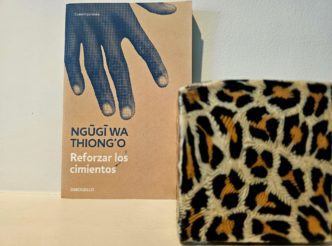
- Editorial Penguin Random House, Pocket. Edition 2023.
- Author: Ngugiwa Thiong’o
- Book for interested in: Africa, neocolonialism, colonialism, history, policy, independence.
- What will? The Kenyan intellectual denounces that the African continent lives immersed in an unjust neocolonialism and demands a kind of pan-Africanism that brings true freedom to the countries.
Paragraph 1
In most media coverage about Africa, It is said of any African community that constitutes a tribe. The absurdity of this common usage is clear when a group of three hundred thousand Icelanders constitute a nation and thirty million Igbo are a tribe. (…) We cannot afford to be foreign intellectuals in our own land.
African intellectuals like Thiong'o are very critical of the way their land is explained from outside.. Course, There is an abuse of stereotypes and commonplaces when narrating a land with little foreign media coverage. (A complaint that has as its counterpart the abuse by African media and intellectuals of the word 'Western', It even happens in the book., where the United Kingdom is put in the same bag, France, Sweden, Greece, Italy, Australia or the United States).
The author's vision is that of a writer committed to the cause of the fight for true freedom in Africa, but, in our opinion, It is somewhat 'urban' and more based on a future desire than a reflection of reality by painting a picture of the situation.. African tribalism is rural, marked and, certainly in our experience, current. Un shona, himba, hamer o samburu, is generally defined as a member of that tribe rather than as a member of the nation that grants you the passport. An Icelander defines himself as an Icelander. Explained another way, Sometimes we feel when reading the work something similar to reading a New York intellectual explaining the feelings and lives of the inhabitants of the Midwest..
Paragraph 2
Modern Western Leadership Stubbornly Refuses to Apologize for Slavery, going so far as to ridicule those who demand reparation. One eminent apologist for the slave past even suggests that victims should offer reparations to the nations that enslaved them.. It reminds us how slaves were made to pay compensation to their owners for the losses they would suffer after emancipation..
This is a hot debate in Africa and in this book. There is an open wound throughout the continent due to the human barbarity that entailed large-scale slavery by European powers.. The answer of limiting everything to a historical moment is not enough. Apologize to the victims, the author points out, It is a minimum moral step to take in the face of such aggression.
Paragraph 3
Africa's awakening must have two corners: must not allow the West to free itself from the hook of morality. The continent must intensify its demands for social justice and the rectification of obvious historical injustices. The West must be forced to accept responsibility for crimes committed against African humanity. The 19th century abolitionist Frederick Douglas once said that power grants nothing if it is not demanded.. Never has and never will.
Delving into the idea of the previous paragraph, Thiong'o demands material compensation. Some counter this argument that Africa is by far, for fifty years, the largest recipient of international aid, mostly western. But that is another open and interesting debate that the author also enters into..
Paragraph 4
Nowadays foreign NGOs assign territories in the same way, and act as if they are on the side of the people against the postcolonial state and its economic sponsors, foreign states. But, They are financed by the treasuries of their governments, mainly western. They are a tentacle of the foreign policies of the governments that finance them.
The role of NGOs, and whether their work represents a benefit or not for the countries receiving that aid., It is another of the great debates on the continent. The Kenyan author understands, as many other analysts understand, that ends up generating more benefits to the countries from which the aid comes than to those that receive it.
Paragraph 5
This does not mean that different African communities, now or in the past, they have not harbored animosity between themselves. In fact, The varied and diverse pre-colonial African communities fought for possessions or territories and engaged in wars of conquest and domination. The much lauded empires of Ghana, de Mali, of the zulus, and of the Ashanti were forged through conquest, and were maintained through systems of dominance and tutelage. But there were also long periods in which the relations of these groups were characterized by trade and peace.. There is nothing particularly African about this (…) There is no colonial history anywhere that does not include macabre episodes of unjustified killings of men, women and children.
Thiong'o eliminates with a stroke of the pen, with that paragraph, two ideas that support the bitter debate of two parties: The racist myth of the noble savage is as false as the myth of the cruel savage. The African social process is the same as that of Europeans, asians and americans. Conquerors and conquered are part of human history. Now, the Kenyan during the book demands that what he encompasses as the West assume its responsibilities. In that he draws a red line. But, It is strange that when talking about those responsible for African slavery he does not vehemently point out the key role of the Arabs and the Sultanate of Oman. Aren't they also responsible for a part?
Paragraph 6
The development of a nation cannot be rated favorably on the basis of a hundred millionaires who rely on the shoulders of a hundred million beggars.. Progress and development must be measured from the perspective of the quality of life of those who live in the valley today, and not on the top of the mountain. Only then the reason, the law and democratic ideals will be in line with the demands of social justice.
The Kenyan speaks of a phenomenon that he describes as global, but that Africa is particularly affected. The distribution of wealth is one of the great challenges of societies that see how fortunes emerge from misery., frequently, people attached to political power. As, the living conditions of hundreds of millions of Africans are maintained or progress very slowly.
| Style | 7,80/10 |
| Content | 8,50/10 |
| Valoración | 8,15/10 |