






Traveling by train spent his framed in the car window like scenes from a movie that is rapid. Some children ran through the channels trying to catch the train, a man waved my way, some ladies dressed in a very elegant saris dragged their bags at the station ... Everything seemed to happen in a parallel time, as if mine had been suspended in the air. Some nine hours after I arrived from Varanasi and, since, my sense of wonder he has not been the same.
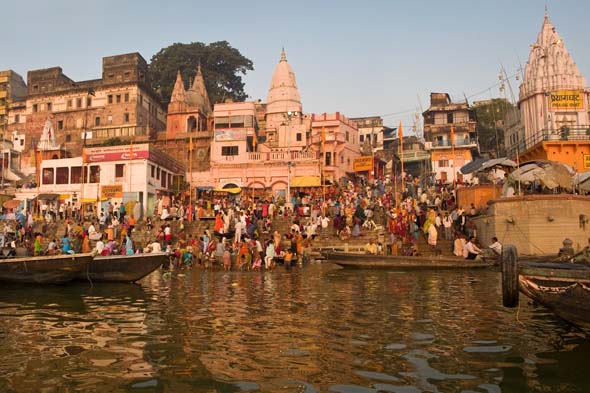
Varanasi is the holiest city of Hinduism, as old as the world. Born at the dawn of history and, as water Ganghes flowing through it, always remains though never the same. The city stretches from the river Ganghes with a first line of more than five miles of ghats, staggered docks where ablutions are performed purification of karma. Behind the ghats, along the crescent that forms the sacred river, doubtful are crammed into temples order, pagodas, sumptuous palaces and fleabag hotels. By the shore roam hundreds of elderly and dying who come from all over India to await death, faithful to the belief that dying in this holy city frees the soul from earthly cycle of reincarnation.
By the shore roam hundreds of elderly and dying who come from all over India to await death
Eager to download the pack and give me a good shower, I stayed in a pension against Ganghes, near the main ghats, and went up to the room. I entered the dark in the middle of one of the frequent power outages and, to open the balcony, the room was flooded with morning light sweeping and a gentle breeze started rocking the curtains. Out, the alien was ongoing Ganghes a tourist, from the balcony of your room, gazed in wonder the constant flow of barges, the thick smoke from the funeral pyres, sadhus staring at infinity ... It was noon, just an hour ago just arrived, and at that moment I knew I would never forget my days in Varanasi.
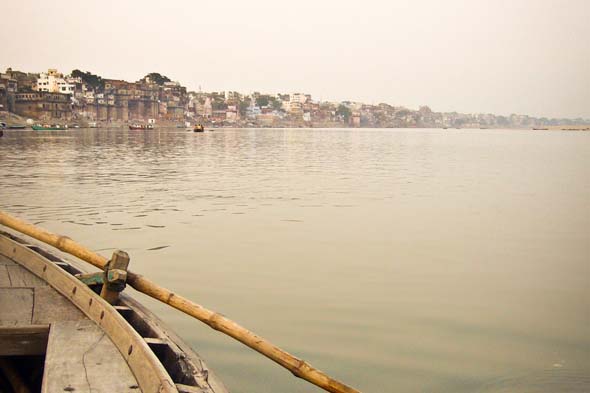
After eating hastily, I came to a boatman who were stationed in front of the board waiting for tourists and I asked him strolled along the river for a couple of hours to the gath Manikarnika, which occur most cremations. By the boatman docked right there, before the light of the flames and under the columns of smoke rising steadily towards the sky from the funeral pyres.
When you open the balcony, the room was flooded with morning light sweeping and a gentle breeze started rocking the curtains
From afar, impacted image. The Hindus said goodbye to family and friends without pain, without harrowing scenes, tears or lamentations, only serenity and quiet contemplation. The fire consumed the flesh and the soul shining through the end of the eternal cycle of reincarnation, the die and rise again and again. When the body had already been cremated, the fires were extinguished and the ashes cast into the river. Death is just another step of life and the essence of being human, deeper and more permanent than that inhabit different bodies.
I could see without difficulty, under a light layer of smoke, feet burning at the stake separate from the rest of a body completely incinerated. That shocking image stayed a while fluttering in my head. And, however, eso no me sad unpleasant results. Inexplicably, Varanasi sums up vitalidad. More than death, I sensed that he was celebrating life, contradictory and strange sensation that can hardly be expressed in words.
The fire consumed the flesh and the soul shining through the end of the eternal cycle of reincarnation
Anyone who has witnessed a sunset in Varanasi will never forget. When the sun disappears over the horizon, Hindu gods call us with overwhelming frantic peals of bells and chanting of mantras. Upon hearing this call, or sadhus, ascetics who have renounced worldly ties, arise from all corners Ganghes along the body covered with ash. They throw wreaths into the river and floating candles that come together and form separate constellations ephemeral sailing downstream. I also wanted to thank those moments Ganghes mother and a little girl I bought a candle and garland of flowers to throw into the river. The current offerings continued blazing until I lost sight, with the hope that, to see them, some little Hindu god remember me.
They throw wreaths into the river and floating candles that come together and form separate constellations ephemeral sailing downstream
I was almost back to the board when I went by chance by the gath Dashashwamedh, where day is celebrated, during twilight, The Ganga Aarti. Vermeer to the public, a Brahmin came immediately to me to untarme tilak forehead (sandalwood paste) and so, conveniently smeared, I enjoyed this fascinating ceremony mixed between people and pretending to be a Hindu, although in reality it was a bewildered tourist unable to decipher the strange ancient ritual. To the beat of drums, mantras and bells, the ceremony lasted as darkness enveloped this city made of fervor and hope.
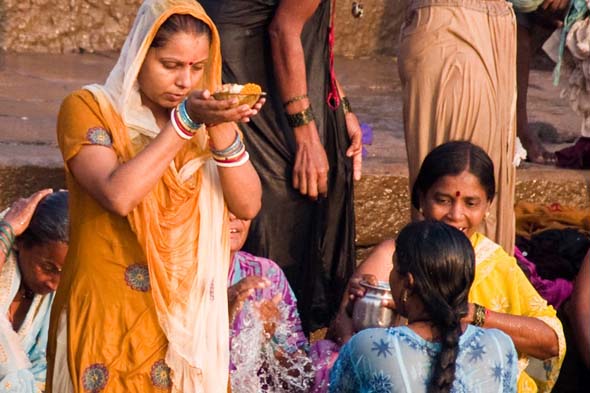
At six o'clock he was back sailing the river upstream. The sun being pushed through the blackness of the night and, little by little, ghats lit with an intense golden glow enhanced by the reflection of water. In the mist of dawn faded the movement of boats crossing to the other side. The barges were loaded with firewood, papayas and some tourist sleepy. Meanwhile, ghats in a crowd in and out of the water constantly. The first rays of the morning sun had called for thousands of people along the river for, as every day, purifying ritual ablutions. Some were bathing, others washed their saris, had even who took the opportunity to wash while greeting the dawn with hands raised in prayer. The air was old and remote, deeply spiritual and surrounded by chanting mantras and music of harps. I, meanwhile, was overwhelmed by feelings.
Varanasi is a relic of the early days of man, although his holiness wake fade before the sandalwood smoke and hide under a layer of dust and grime
Shortly after, about nine o'clock, when the sun is shining bright, whole congregation of people that vanished. Soon, Ganghes the shores of calm returned to normal, magic although small particles remained floating in the air. Then I found myself with a happy smile and excited to have lived everything.
Varanasi is a relic of the early days of man 3.000 years later still beats a timeless rhythm, although his holiness wake fade before the sandalwood smoke and hide under a layer of dust and grime, making it invisible to the most skeptical. The impact on the senses was overwhelming, while still, long after, I keep noticing, remembering the smell of death, the cloaca, sandalwood ... and to life.


