






The central highway, up to Taguasco, in Santa, ends abruptly after 400 kilometers of a wide eight -lane road. That is when one becomes aware of entering the Cuban East, When through villages and wavy roads sometimes, always dark, keep going. We, With an autoestopist on board, We managed to get out of the pull until Camagüey After ten o'clock at night after committing the recklessness of driving at night and floating, Although the darkness was compensated by a crazy storm that illuminated the road.
Camagüey, although there is currently upside down for works, It has a small and labyrinthine historical center declared a World Heritage Site. Conceived in the 16th century to mislead the pirates, That provision did not prevent, in 1668, The corsair will assault Henry Morgan. The Historic Center is located around the Plaza de los Workers, With the Church of Our Lady of the Merced as maximum exponent, A temple raised in the seventeenth century. In fact, Camagüey is the most religious city in Cuba, And that shows in the number of temples as well as in the historic visit of Juan Pablo II in 1998.
We managed to get from the pull to Camagüey after ten o'clock at night after committing the imprudence of night driving and flooding
After a brief tour of the city, we set up to Holguin, A place where we barely spent one night. We go around this population, The largest fourth on the island, PARKS PLAYED. And is that our goal, As if it were a prize., It was getting to Baracoa. And somehow everything that remained on the road were small stops so as not to do the whole journey of a cup: In addition to a marathon trip, It would be impossible to predict anything taking into account storms, The darkness, The roads and curiosities of the road.
The unforeseen consequences of a road trip, especially for the Eastern provinces, They are cushioned - and much- If any of the hundreds of Cuban autoestopists are collected requesting transportation. We would not have arrived the first night to Camagüey if it had not been because a boy from that town accompanied us, who told us that this flood and that turtle speed, And at that time, Nor were such infernal conditions as we thought. He had already traveled it in many times even when a meter was barely seen in front of us.
The boy we had collected by doing Hestop told us that this flood and that turtle speed were not such infernal conditions
And in those that, From Holguin, We reach Santiago de Cuba crossing I mark and High cedar, two populations that together with Mayar and Cueto They form the four most universal places in the son, of the labor Company second. Passing, Just at the border between the provinces of Holguín and Santiago de Cuba, We stop at The Manacas, In Birán. In this farm, an old agricultural and livestock exploitation, Raul's childhood passed and Fidel Castro. Here, Between large extensions of land, It is a recommended stop to make conjectures of how both leaders became revolutionary awareness.
But it is in Santiago de Cuba where, a 26 July, The departure gun for the triumph of the revolution is given, When a group of men assaulted the Moncada barracks. And although said assault did not reach the desired success, triggered a series of events that, this time it, It would conclude six years later with one of the epic adventures of the twentieth century: 12 men who survived the injured landing of a yach.
It is in Santiago where, a 26 July, The departure gun for the triumph of the revolution is given, When a group of men assaulted the Moncada barracks
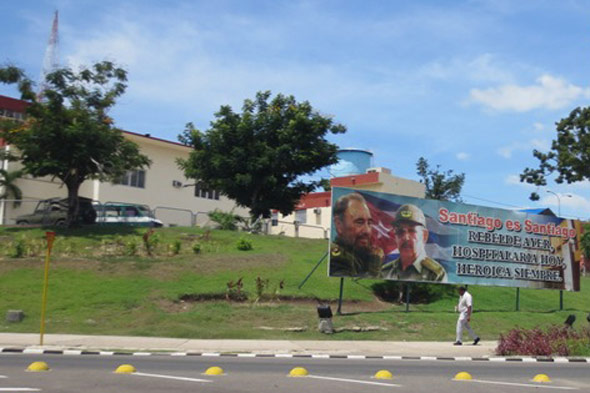
Sixty years later, That barracks is transformed into a school and the city, That was the capital of the country before moving west of the island, more difficult access to the enemy, Keep a peaceful air, Nothing to do with Havana: Low buildings, a little Alameda in the bay and the curiosity of knowing that his first mayor was Hernán Cortés, They accompany the visitor.
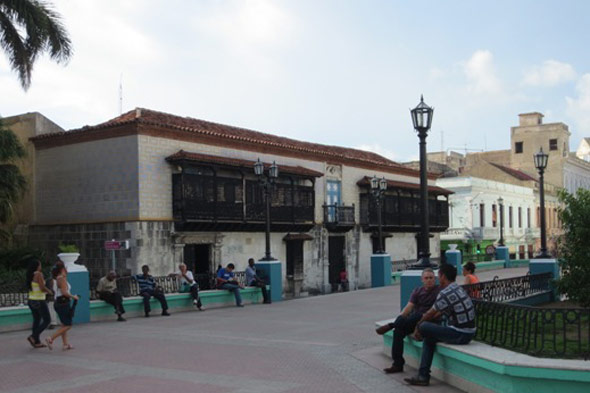
Downtown, next to the cathedral, The house of La Trova and the Hotel Casa Granda, The historic building where it stayed (and wrote) Graham Greene, is the house of Diego Velázquez, Conqueror and first governor of the island. The construction is considered the oldest house in Cuba (16th century) And it is worth the museum's visit.
From Santiago, uploading on a tortuous road of several kilometers, It reaches the great stone and the La Isabelica coffee plantation
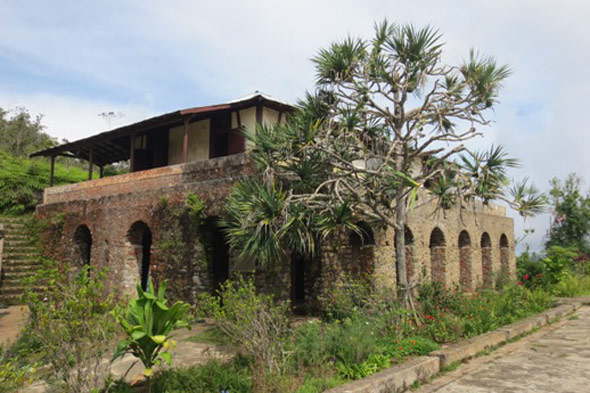
Moving away from the center, The surroundings also keep a lot of the historical content that the area has defined. From Santiago, uploading on a tortuous road of several kilometers, It reaches the Great stone, a mole located at the summit of a mountain from where, more than 1.200 meters, The "Hero City" and the green landscape that surrounds it by these dates. If it is difficult to get here due to the absence of public transport, Something more complicated is to advance a couple of kilometers more along a path of stones and land that leads to the Cafetal La Isabelica.
This coffee is not the only, since there was more than 600 after the great French migration of the nineteenth century that, settled in the neighbor Haiti, He settled in Cuba after the revolution of the neighboring country and culminated, in 1804, With the abolition of slavery. Victor Constantin It was one of those French arrived in Cuba. He settled in these hills with his wife, A Haitian slave named Isabel, name to the farm.
The traces of the coffee culture remain indelible
The place enjoys Unesco's recognition as world heritage and the restoration of this place shows its jobs, Warehouses, dryers and explanations about the forms of coffee production taking advantage of the orography and local climate. “The ruins of coffee plantations of the nineteenth and early twentieth centuries in southeastern Cuba are a unique and eloquent testimony of a form of agricultural exploitation in a virgin mount, The traces of these have disappeared in the world ", justified the organization by granting it in the year 2000 The distinction. Many of the businesses broke in the second mitrad of the nineteenth century, But the traces of that culture remain indelible.
Finally, An essential visit is to go to the Morro Castle, the military strength that defended the Spaniards of the enemy siege and to which it is reached by bordering the coast on the outskirts of the city. Once inside, between the thick rock walls and the recesses of fortification, An exhibition of photographs and explanations makes a tour of the last centuries of a privileged enclave.
An essential visit is to go to the Morro Castle, The military strength that defended the Spaniards of the enemy
Talking about eastern Cuba is talking about colonization (here it looked out Columbus For the first time), of resistance and independence, economic and cultural development, policy, of revolution and, finally, History. A trip to Santiago, With several monuments and spaces backed by the recognition of UNESCO, feed all that.


