


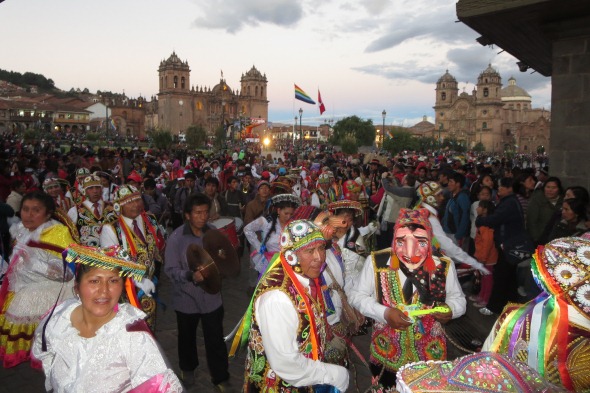


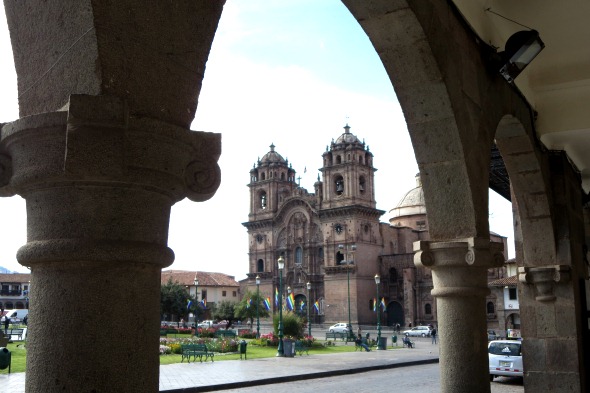

The view of the square was her. The last afternoon light illuminated the monumental churches while colorful people on all sides of the world walked and enjoyed it and, center, The statue of Inca Atahualpa seemed to dominate the region. The square prepared for the party The Sun Festival, The Sun King, that is celebrated around 21 June, The shortest day of the year in the southern hemisphere. It is when the sol beats the darkness and the days begin to be more and longer.
No doubt the place is very different from what it was when it was when Atahualpa reigned in the Inca Empire, Shortly before the arrival of the conqueror Francisco Pizarro. The Plaza de Armas had been thought by the Spaniards. The churches that frame it were built when Pizarro The region still commanded. But I was looking for keys. In each corner, In each mountain, In every brunette face I was looking for keys that would approach how that empire had been, The greatest pre -Columbian America, that he knew how to erect without knowing the metal, Neither the wheel nor the writing.
In each corner, In each mountain, In every brunette face I was looking for keys that would approach how that empire had been
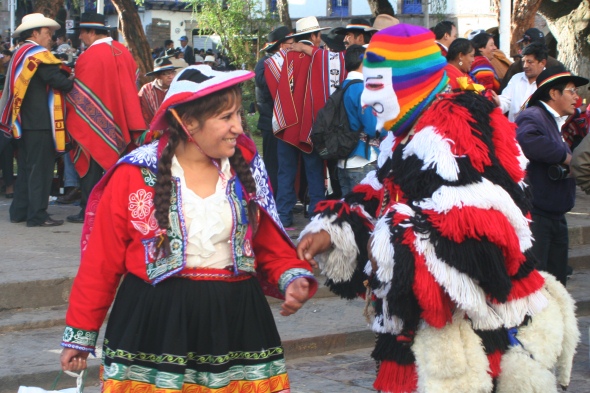
We had arrived at Cusco in the morning, But we leave several hours to acclimatize the tremendous height at which it is located, almost 3.500 meters. We rest, We take pills to fight the typical headache and drink a lot of coca tea. In the afternoon we went for a walk. Several cholas, With their colorful typical outfits and their torn eyes offered to take pictures in exchange for some soles. A group of young people rehearsed their dances for the next Inti Raymi. I filmed everything, In a vain try to capture the essence of that magic square.
Before we got around we walked on the old part of the city. We went through what was the house of Inca Garcilaso of the Vega, We visited the market where in different positions the products of the farms in the area were sold and walked through alley with beautiful wooden balconies. Arcadas housed countless clothing businesses and other Andean products. But what caught my attention was that, Despite faces with indigenous factions, I didn't hear a word of Quechua. They all spoke in Spanish.
"Nobody wants to speak Quechua in the city", The guide confessed to me
"No one wants to talk to him in the city", The guide we hired to visit the Sacred Valley of the Urubamba. According to him, Young people see Quechua as a language of the mountain people, of the past. Instead, They identify with the Internet, Facebook and cell phones. The same guide told me that, While he spoke Quechua, The language of their parents, With his friends he spoke Spanish.
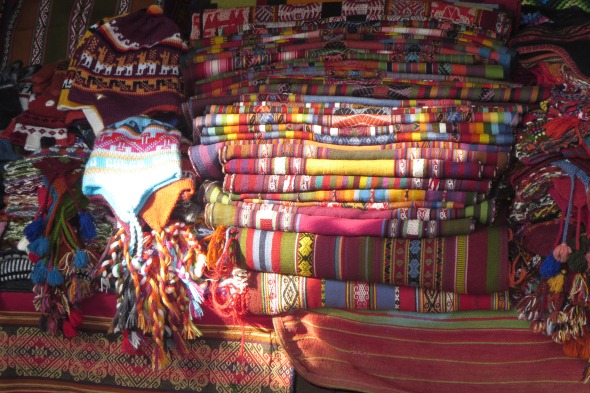
We continue in his car the route that took us following the course of the Urubamba River, This one was always for the Incas. The first stop was in Writer where, from above, The Inca Ruins Lord a pronounced curve of the Flowing River. At the foot of these, A town houses a picturesque artisanal fair where alpaca ponchos stood out. We bought some cholas cholas (Women of Quechua ethnicities) And we ate them before going back to the car in which we follow our path.
From the top of the Pucará I understood why the Quechuas chose him for defense: In that place the River Valley is almost a gorge
Cusco, THE CAPITAL OF THE INCAS, It was located just east of the highest foothills of the Andes. The Urubamba River, that is born near there, It carries the water from the nearby snowy peaks to the Amazon jungle at the foot of the mountain range. When, in 1536, Manco Inca, Atahualpa successor, He rebelled against the Spaniards, He guided his people around the valley of this river and became strong at the Pucará de Ollantaytambo.
We climb to the highest point of the Pucará, something that cost us a lot because Ollantaytambo, although lower than Cusco, It is still high. From the top I understood why the Quechuas chose that site for defense. In that place the river valley becomes very narrow, almost a gorge. Manco Inca reservoir the river and flooded the valley so that the Spanish horses could not harass it. But in the long run everything was useless, He had to continue his withdrawal by lowering the river on his way to the Amazon jungle.
The train tracks border the Urubamba, The route made by the defeated Manco Inca
The next day we took the train to Machu Picchu. There are only two ways to get to the place, A long walk along the Inca road, or by train. The roads border the Urubamba, The route made by the defeated Manco Inca. When descending in the town of Aguas Calientes, We barely take a few minutes to leave our things at the hotel and ran to the bus that, After one thousand and one curves, He left us at the door of the lost city, THE MAGIC MACHU PICCHU.
Over 300 years the region remained deserted since Manco Inca ordered the Quechuas to the New Inca Kingdom that he created below, In Vilcabamba. There the descendants of the Incas maintained an independent kingdom of Pizarro and the Spaniards for more than 40 years.
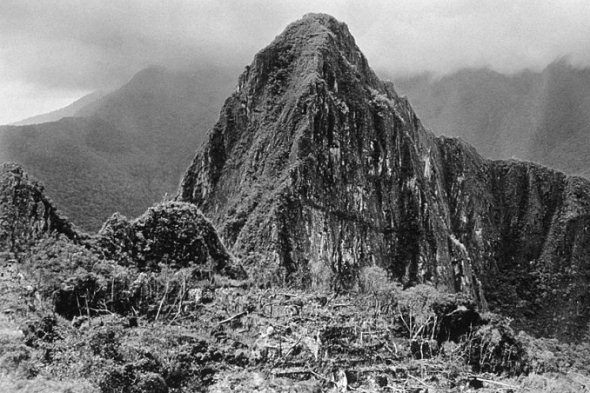
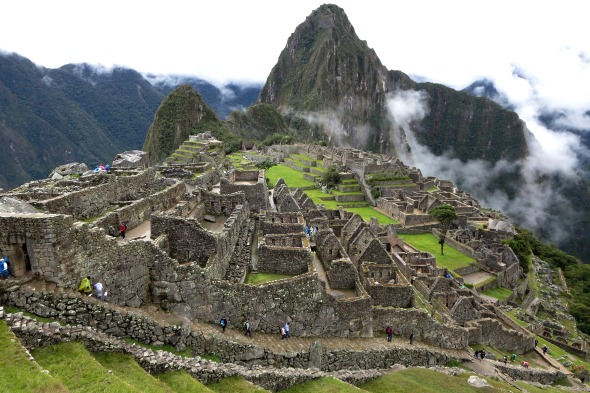
Upon entering Machu Picchu I realized why he is considered one of the most shocking places in the world
Upon entering Machu Picchu I realized why he is considered one of the most shocking places in the world. The city that Manco Inca ordered to depopulate is in the upper part of a mountain, The old mountain, since that is the meaning of Machu Picchu. Further back another, higher and steep, is Picchchu, The new mountain. The view of the city surrounded by impressive and covered by dense jungle hills slopes can not be described with simple words. Before trying to do it, I prefer to incite the reader to visit this magical place.
Our guide explained each of the buildings and squares of the city. One of these caught my attention more than others, It was a site destined to place the mummies of Incas for certain festivities. These were brought from Cusco along the Inca path. “And what happened to these mummies?”, I asked. Your whereabouts are unknown. One of these, of Pachacútec, It was found by the conquerors but the head of the transfer never arrived in Lima. The hiding place of the mummies, Sacred for Quechuas, became the best kept secret of the entire conquest.
We climb to the top of the Huayna Picchu on the stairs built by the Quechuas almost 500 years back
After the withdrawal of Manco Inca the jungle invaded much of the city; however, Its location was known by the few Quechua farmers living in the area. In the nineteenth century some Europeans were guided to the place and withdrew relics for their private collections. Only in 1911, The American archaeologist Hiram Bingham He managed to guide him to the place and understood the importance of the finding. So, Machu Picchu returned to life.
On the second day of our stay we went up to the top of Huayna Picchu. The only way to ascend its almost vertical walls is following the stairs built by the Quechuas almost 500 years back. Very close to the top a Pucará explained the reason for those constructions. There, almost at the top, A permanent guard who watched the Puerta del Sol was bet, At that time unique access to Machu Picchu. The arrival of each visitor or enemies was announced to the inhabitants of the city lost from the Pucará de la Cima del Huayna Picchu.
We were able to film and photograph Machu Picchu deserted because a slip prevented the arrival of the train full of tourists
When descending from the heights we learned that a slip had prevented the arrival of the train that brings and carries tourists. While we didn't know how we would return to Cusco, The fact allowed us to visit the city again without the presence of the two thousand visitors he receives daily. We take the opportunity to film and photograph Machu Picchu deserted covering up with mist, A ghostic view.
At night the railway traffic was reopened and we returned to Cusco in time to witness the feast of Inti Raymi. From our Hotel Plaza de Armas window we could see the more than 200 regional groups that paraded with their typical costumes and dances, mixture of the indigenous and the Creole. While we crowded among the crowd I couldn't stop thinking that what he was seeing was a fantastic amalgamation of Inca culture with the Spanish colonial. All proud of their mixed heritage. This explained that in Peru the anti -Spanish resentment that is perceived in many Latin American countries would not be noticed.
After more than eight hours of the parade we went to sleep exhausted but happy to have found a true Hispanomeric.
Follow me on Twitter: @GerBartolome


