The trip
In the last foothills of the Sierra de Calderona, which overlooks the Mediterranean surrounded by a valley full of orange, is Sagunto, in the province of Valencia, a city that has one of the most impressive archaeological heritage in Spain, and a history of exceptional interest.

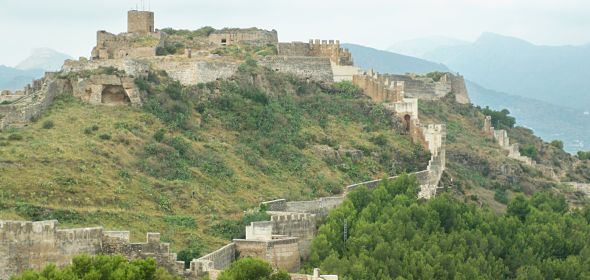
There are plenty of, as, reasons to go on foot and enjoy all your architectural treasures. Created around a fortress, His story is marked with battles. Its heroic resistance, In the third century before Christ, In front of the siege of the Cartaginan General Aníbal moved so much to Rome that he decided to make it one of his favorite villas in the itinerary of the Augusta Via. Thus began the II Punic War between the Roman Republic and Carthage in the year 218 before Christ, contest that put the foundations of the great military power available to Rome and its expansion beyond its borders.
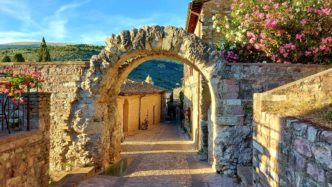
The visit to the modern Sagunto can begin on foot through the Plaza Mayor Porticada. From her, The best for the visitor is, then, Get to the castle through the old Jewish neighborhood, With its crooked alleys, Encaled houses and their ogival windows that attract the attention of the traveler. The most notable of the square is the Gothic church of Santa María (13th century) and the City Council (century XVIII). In the main street they current. The nucleus originally from the city arose around the imposing castle of almost a kilometer in length. Traveler's impressions cannot be more satisfactory. The current ancient city rises on a hill to which you get tired on foot, But it is well worth it.
The Roman theater
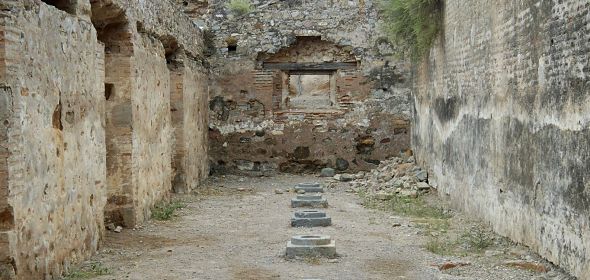
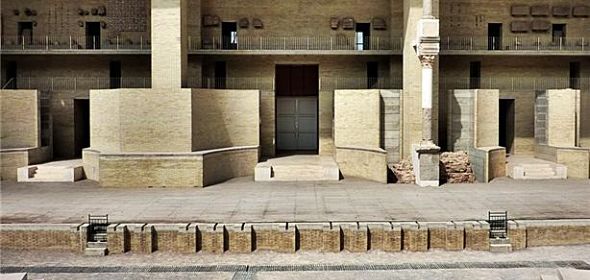
Divided into seven independent enclosures, of this fortress, Circunvalted partly by a wall of different eras and styles, It is pleasant interest in arms, where the forum is located. In this area, Not only monumental but also commercial, a basilica and other religious buildings visible by the traveler are located. In the same mountain skirt, even outside the castle, is one of the monumental jewels of the Iberian Peninsula: The Roman theater, in which the concavity of the mountain was taken to such an extent that most of the stands are excavated in the rock itself. Built around the year 50 before Christ, It was the first building declared National Monument of Spain, in 1896. Now, Many of its visitors fail to understand that the rehabilitation of the enclosure has hidden much of the original stone of La Cavea.
Of turns to the story that chisered the current Sagunto, Aníbal put his gaze on the conquest of the Iberian OSE due to his geostrategic situation in front of Rome, its mineral and agricultural resources and, especially, for the large number of mercenaries that could contribute to its army. The Carthaginians immediately launched the battle in the 219 Before Christ and stopped respecting the independence of the Valencian city, that was under the protection and supervision of the Roman commissioners according to the Ebro treaty (226 a.C.) After eight uninterrupted months of siege and continuous blockade, The people of Sagunto preferred to die with dignity before surrendering. The Carthaginian swept the city, But in return he catapulted her to history. The taking of the city was a firm declaration of war to Rome. Seven years after Sagunto by Aníbal, This was recovered by Roman generals Cneo and Publio Escipión under the name of Saguntum. In the 214 a. C. It became administered as municipality and began to have a large circus in the lower part of the city and a theater with capacity to 8.000 spectators. From Sagunto, Rome began its expansion through the rest of the Iberian Peninsula.
Mariscal Suchet siege
It was not the Roman domain, however, An isolated episode, since throughout his successive conquests of the square by Alanos, Vandals, goths, Byzantine, Arabs or Christians, Sagunto lived particularly intense moments, as the defense of the human limit of Brigadier Andriani before the fence of the French Marshal Suchet, During the War of Independence (1808-1814). It was also in Sagunto where, In December 1874, There was the military pronouncement headed by General Martínez Campos, which ended the Republic and originated the period of the history of Spain known as Bourbon Restoration. Another conquest, although of a different nature, It was the one that occurred at the beginning of the 20th century with the creation of the steel factory of the high furnaces, that would be, eventually, The birth of an urban nucleus parallel to the original and with elements of great historical value, Like the high oven number 2, the 1950. The idea of ??the local government is to integrate it into the city's patrimonial network and that can be visited by the tourist. From outside, The truth is that it impresses.
If you want more information about this and other routes: www.lugaresconhistoria.com
The road
By car for the A-7 from Barcelona in less than four hours; by the N-234 from Zaragoza or Madrid and for the N-340 from the south. From Valencia you need just half an hour. By train there are five daily talos that take Barcelona to Sagunto. From Madrid two talos leave for 8 and 18 h. By bus: From Valencia they leave every half hour among the 7:15 and 22:15 h.
A nap
Occidental Monte Picayo, five -star (Urbanization Pont Picaio; from 155 euros/night). Cheaper are Austria (JOAN D’Austria Avda, 76; 75 EUR), Azahar (Valencian Country, 8), Brig (Sun square, 2; 50 EUR), Teide (Nine of Ocubre, 53; 50 EUR) or the troubadour (Troubadour, 63; 40 EUR)
A table set
Rice is the star ingredient of local gastronomy and nothing better than tasting it in L’Armeler (Castell, 44), Rafael (Churruca, 28), EUGENIO HOUSE (Pescadería Plaza, 8), The wheels (Cecina, 6) or almirez (Catalonia, 7)
Highly Recommended
Recommended books:
-"Sagunto. Its history and its monuments », Antonio Chabret; Sagunto savings and relief box; 1974.
-"Sagunto: Town, Emporio and Roman municipality », Carmen Aranegui; Bellatera; 2004.
-"Sagunto: nomenclator of the streets, old and modern squares and doors of the city », Atonio Chabret; Editorial Maxtor; 2008.