



I remember the rimbombante inauguration that once was the longest tunnel in Madrid. The works were not yet ended and there were still a few weeks to open to traffic, But it mattered little. The electoral frenzy claimed inaugurations and had to cut the tape of the subterranean flaming with cars or without it. We inaugurate it, course, walking it on foot, that cars would come in due time. Since then, I fell rather little of the hasty inaugurations of the minutes of the garbage of the legislatures, be of the fur that they are. That's why I twisted the gesture a few days ago when the still mayor of the capital discovered in the trinitarian convent, Just a few hours after leaving office, the funeral monument where the remains of Miguel de Cervantes, no less.
Three months ago, Archaeologists had found their remains to hype and saucer in the bowels of the convent, where it was known that the spoils of the immortal author of El Quijote, deceased the 23 April 1616, although the unknown was maintained on the location of his grave. As soon as the finding was made public, doubts about the authenticity of the remains were multiplied, that the City Council claims to have dissipated after finding in the archives of the nuns a document of the time that proves the transfer of bones to the Trinitarian convent.
With doubts or without them, It was striking to see Cervantes's grave inaugurated so hastily, As if there was no morning
With doubts or without them, It was striking to see Cervantes's grave inaugurated so hastily, As if there was no morning, just a few hours from the change of guard in the house of the town, almost with the same obsessive zeal with which Gollum hugged the ring. The rush of doubts or the understandable human vanity to caress posterity?
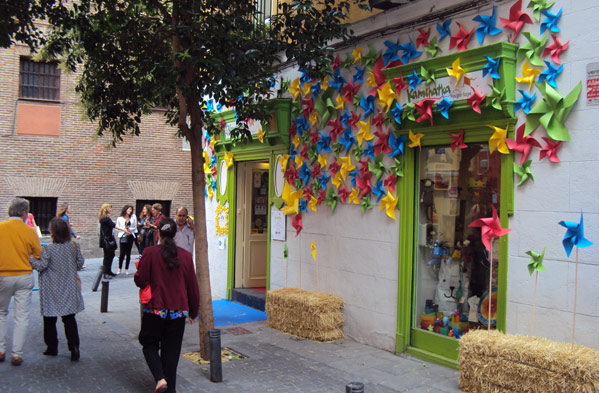
Life has tanning me in skepticisms, but the next day he walked through the Las Letras neighborhood (popularly known as orchards) in the direction of the trinitarian convent. During three days, the nuns opened their doors for the solace of the curious, credulous and skeptical eager to pay literary homage to don Miguel, Whether or not its remains are what shelter that niche. Did I claim a certificate of authenticity when I walked through the snow in the Prague cemetery on my way to Kafka's grave?? Or when discovering the tombstone of Hernán Cortés, whose remains wandered for centuries from one place to another, in Mexico City? Why then demand Cervantes a plus reliable veracion?
Did I claim a certificate of authenticity when I walked through the snow in the Prague cemetery on my way to Kafka's grave??
Trinitarian nuns must be hard to peel, because they had only authorized three days for the awkward visits in morning and afternoon days. After, It remains to be seen how tourists' access to the tomb of Cervantes will be arbitrated. It would be paradoxical that an expected find.
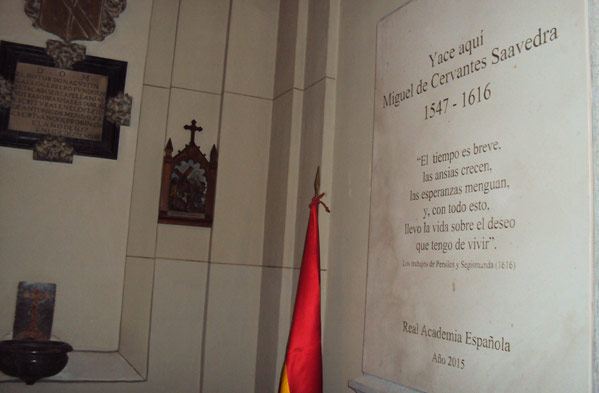
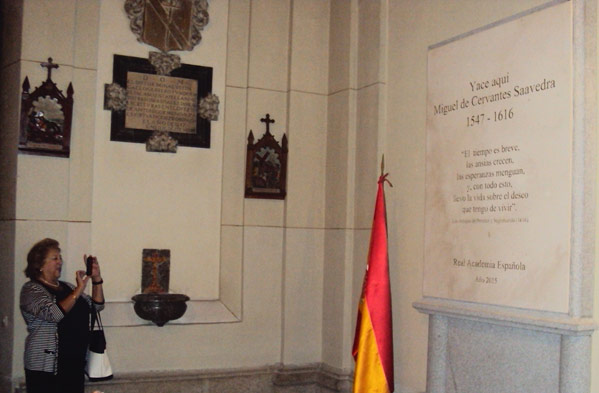
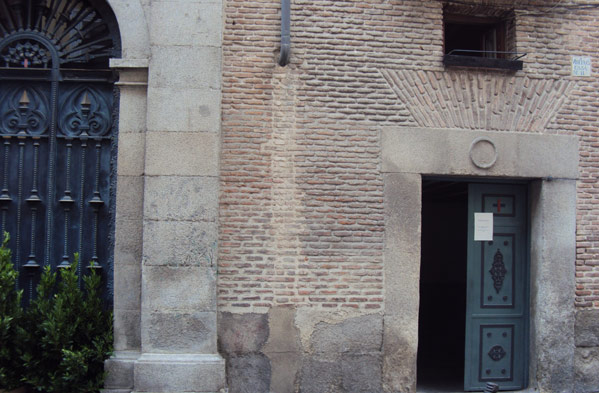
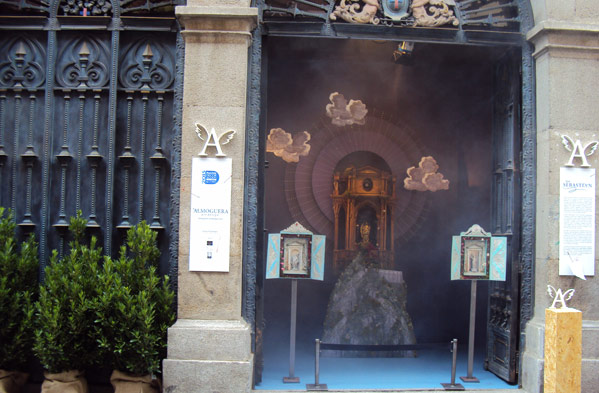
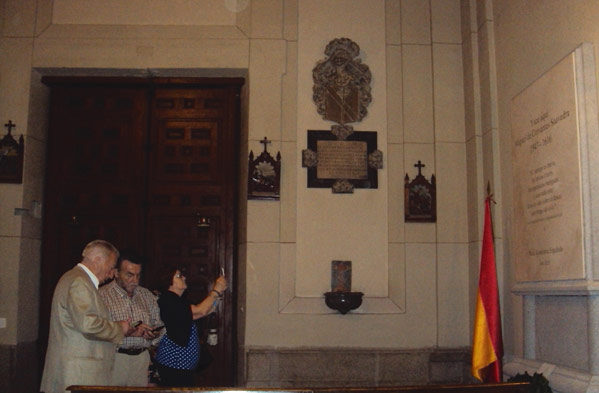
The first thing that surprises me is that there are just people, Fearful how to give me Bruces with one of those queues that make good the saying that in Madrid "there are people for". From the small entrance door to the convent hangs a sheet with the visits schedule where Cervantes is not even mentioned. Is open and we enter. After crossing the dark zaguán, We arrived at a stay where access to the crypt is found in which the bones were found, now closed with gates. A few meters later, On the other side of a narrow corridor, is the Church of San Ildefonso, Also in gloom, where at the end of the banks, To the left of the central nave, The remains of the universal writer rest. Half dozen people photographed from all possible angles the tombstone discovered a few hours ago.
At the end of the banks, To the left of the central nave, The remains of the universal writer rest in the gloom
With errata included, Well, the text recorded on the tombstone -«‘ Time is brief, Ansias grow, Hopes diminish and, With all this, I take my life about the desire I have to live., which corresponds to one of Cervantes's immortal works, «The works of Persiles and Sigismunda (1616)» (It is actually the dedication of the work to the count of Lemos, who wrote on his death bed, "Put your foot in the stirrup with the desires of death"), In the epitaph it is renamed "the works of Persiles and Segismunda". The paradox is that the commemorative slab bears the signing of the Royal Spanish Academy, that he has already rushed to claim the City Council to repair the error. Time will be to correct it, I guess.
The remains of Cervantes are escorted by the fifth and sixth stations of the Via Crucis, With the carved images of the plineus that helps Jesus on the way to Calvary and the impression of the Holy Faz. In front of the funeral, a saint that everyone turns their backs, THE EVANGELIST I think I remember. A Spanish flag in an immaculate mast, a flower crown and a typed note with some verses, «Already the creative mind, Next to the genius rests, WHERE GLORY MORA, The spirit is tame ». To the left of the grave, A small more modest tombstone in memory of a benefactor of the convent, Dr. Agustín Gallo Guerrero, who financed in 1697 The construction of "six chaplains and other pious works".
The best writer in the Castilian language deserves something better, A mausoleum according to the greatness of his work
I move away a few steps from the tombstone with the conviction that the greatest writer in the Castilian language deserves something better, A mausoleum according to the dimension of his work. I upload one of the steps of the main altar to take a photograph from the lattice that separates the temple from the rooms of the closing nuns. «Don't get there!», I listen to a lady behind my back, The person in charge of opening the temple to the visits, With gesture of Captain General. For a moment I thought I was about to step on the bones of Cervantes himself, But immediately it reassured me to see that it was only the usual, And so Spanish, Authority display, as free as Rídiculo. I walked away without grinding while the woman continued attending to a journalist with reluctance.
I left the temple and took refuge in The pain, few meters below, an almost centenary temple of the taverns and huertas bars. There, Between reeds and tuna windows, I finished off my tribute to Cervantes, Without worrying whether or not I had been to his grave. And I remember those lines of a very scientific edition of "El Quijote" of 1864, My father's gift for my age, in which he read that "his funerals were poor and dark as his life had been" and that "he arranged for him to be buried in the church of the Trinitarian nuns. His bones were confused with the other bodies that were buried in it, and lovers of Spanish letters, for a negligence left guilty of their contemporaries, They cannot say "here lie the remains of the author of Quijote". Or if.


