

Night Falls Fast, as usual in Ecuador. The chorus of frogs and the chirping of millions of insects filled the air heavy and cool on the slopes of Mount Murud, en Sarawak, a Malaysian provinces of Borneo, the equatorial island's largest planet.
1943. The sweeping World War II Southeast Asia, with the Japanese troops gradually extending from Burma to New Guinea, past the great island of Borneo. But the great interior of the island jungle, then the largest expanse of primary forest outside Africa or the Amazon, remains untouched and only accessible through the endless maze of rivers that cross the island. It is to this inner, the ancient land of "headhunters" Salgari, where a young English officer, Tom Harrison, parachutes, guerrillas trying to organize as the same men that the administration has never succeeded in civilizing colonial.
Harrison's feat is history, but the men who went to look still live the high parts of the Cordillera Central, los Kelabit Highlands, where as if the mythical Shangri La is involved. Straddling the borders of Malaysia and Indonesia, los Kelabit settled in the Baram River headwaters hundreds of years ago, devoted almost exclusively to hunting and the cultivation of upland rice. An area and a culture whose visit is restricted to tourism and only accessible by air or walking near 500 miles through a spectacular forest, yet, the planet.
we start the ascent of their sacred mountain and looking for traces of the Penan, the original inhabitants of Borneo, real men of the jungle
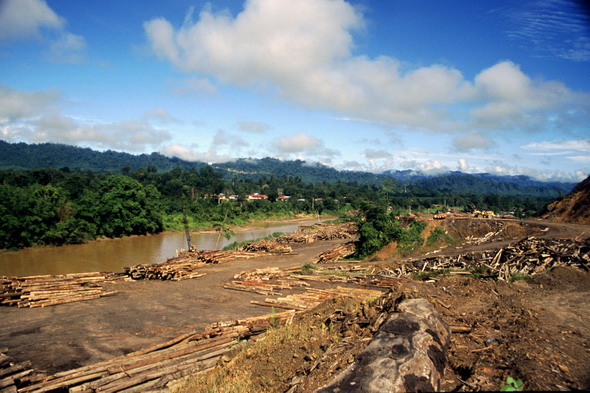
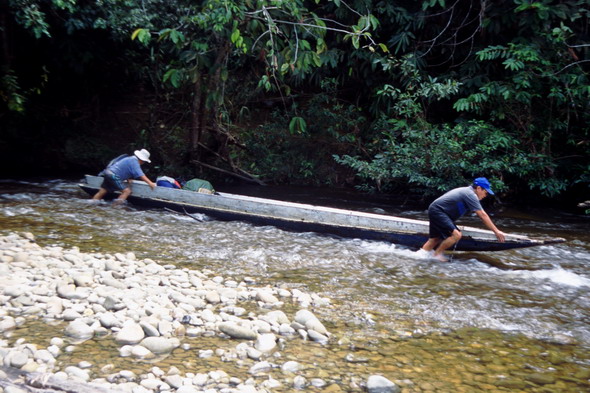
The ascent begins very early Murud. Along with Joe Layan, Guia mi Kelabit, we start the ascent of their sacred mountain and looking for traces of the Penan, the original inhabitants of Borneo, real men of the jungle. We crossed several rivers by makeshift giant log through the channel launched. A very dense vegetation around us. We are on the edge of one of the world's largest timber concessions, that gradually destroys the few areas of original primary forest Harrison could see more than 60 years.
During the nights, in makeshift camps where we tend our hammocks, we see, against the backdrop of the lightning flashes of awesome storms that sweep the forest, the distant glow of the logging camps, lost in the huge expanse of green and completely disconnected from the rest of the world.
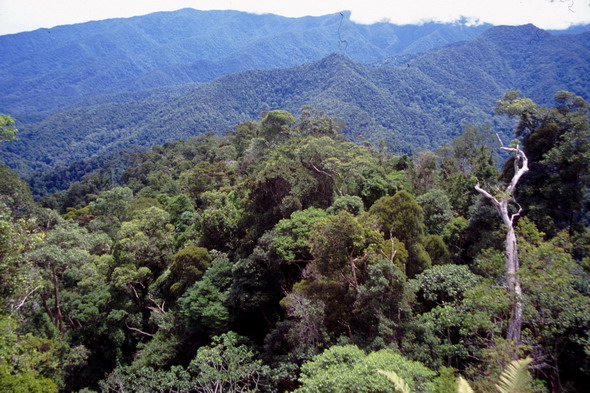
Gradually we go up, helping the aerial roots of the fig primitive, shortly after sunrise reaching the top of the peak, where the forest is spread out before us with the ridge lines like waves on the sea emerald tree. We started the descent down climbing up the slope to a small creek. Along the shore, two small figures a piece of smoked meat. A "DJ", a small pig hunted by these two young characters, paler than the Kelabit or kayak the coast. Penan.
That night we spent with them, refuge in a small rattan leaves, where others come Penan. I do not understand those who speak and Joe just a few snippets, but I am surprised at the tremendous verve of the whole group. In the absence of any modern means of communication, is through speech, of the mothers sing songs and stories that the elders mutter, tradition is transmitted Penan.
An image that Harrison did not contemplate that his world at war, a picture of one of the last places on Earth, capitalized.
In June of 2013, Juan Ramón Morales left us with this magnificent Borneo story. In our section, 15 VAP years we have seemed magnificent to remember that there are still jungles to explore.