The trip
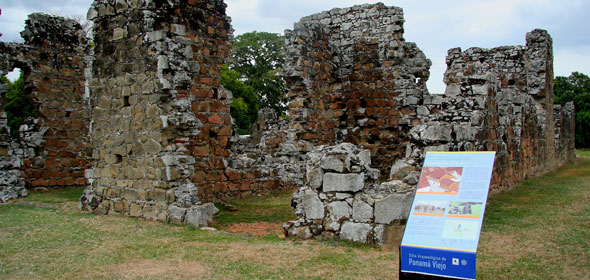
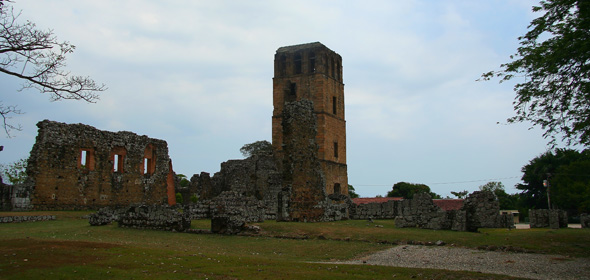
Today there are only remains of ruined buildings left standing, only the tower of the Church of Our Lady of the Assumption-. Stones shattered by an unequal battle in which 1.200 men under the command of the pirate Henry Morgan ended up with what life crossed his hunger for wealth. Years before, in 1596, Sir Francis Drake (noble name by which the British named a bloody pirate) had been killed trying to attack again Portobelo, locality 100 miles north of Panama, which had become the most important port of Spanish America. Drake had beaten so many times the Panamanian coast blood stained the blue sky on its way. From Portobelo out most gold and silver was removed from America bound for the Iberian Peninsula.

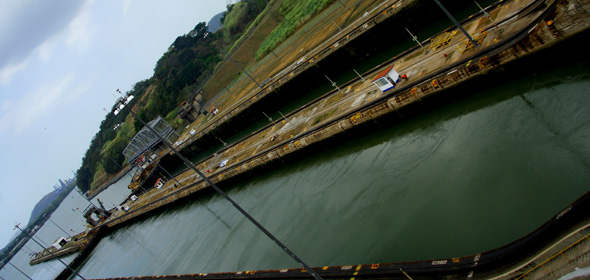
The traveler arrives in the capital of the isthmus to the feeling of wanting to run into all those stories you read on a port, area, from which it was built to conquer the Inca Empire. Pizarro was in Panama where he had to recruit the troops that garnered little then take the greatest empire that ever existed. It is from here that ships with the gold went to persuade Charles V to those 200 mad men were conquering an entire continent. Here vessels also stopped the Crown itself had to be sent to quell scores of revolts that originated from the greed of the conquerors. Panama is, certainly, the key in all this epic board.
But this time the traveler decides to stop at a less known story. What is Panama la Vieja? But, Before answering your question decides to visit Casco Viejo, that arose after the destruction of the ancient city, and retains all the charm of Spanish colonial cities. The cathedral is a jewel, with two white towers holding the sky. Cobblestone streets, destartaladas homes, Caribbean music, Indians selling gone wrong tourists. Everyone remembers life fabric of Havana. A is tattooed around the country's history, even keeps a bust of Charles V on the Paseo del General Esteban Huertas. You can also visit the Canal Museum, en la Plaza de la Independencia (is highly desirable). By now it is clear that Panama has too much history and we should try to gradually absorb.
Cobblestone streets, destartaladas homes, Caribbean music, Indians selling gone wrong tourists. Everyone remembers life fabric of Havana
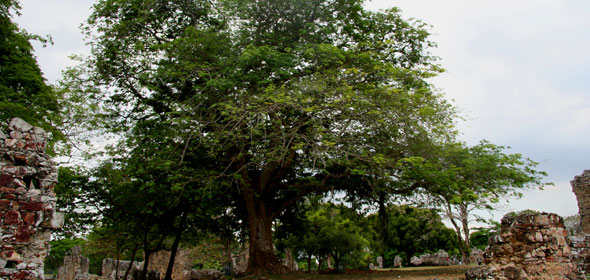
Then the traveler decides to take a taxi to take you to the city in ruins. The journey is to be negotiated, but if several people will have to try that the price is around two dollars per member (reasonable price abroad). There, the other side of town, after crossing dozens of skyscrapers and shopping malls, expect the ruins of Old Panama. You have to pay four dollars to get. We start the tour at the foot of the tower of the Church of Our Lady of the Assumption, the only one left standing. A simple overview helps to understand the violence of the attack. Crumbling walls on either side of what was a colonial city that served as a bridge to the Pacific. It was here, in 1.519, when the noble Segovia Pedro Arias Dávila founded the first Spanish city bathed in its waters (On another occasion in VOD we will tell the story of the discoverer Núñez de Balboa, first European to see the big ocean). Explanations of the signs that accompany the tour show the daily life of this city through its civil and religious buildings, but few have the Morgan attack.
The date controversy
Historians do not agree on whether the attack occurred at Morgan 1670 or 1.671. According to the chronicler and medical Corsair, John Esquemeling, which published the book "The Buccaneers of America", the actual date of the attack was 28 August 1.670 and not 28 January 1.671 as most historians say Spanish and Panamanian. There is some controversy over this point, but it seems more likely that the doctor was wrong English privateers.
Morgan departed from Fort San Lorenzo, in the Chagres River, near Portobelo, with 1.200 men to take Panama. He had already plundered the coast and was intended to now take the treasures of the city. After a bumpy journey, in which they were constantly harassed by Indians, came to the city. The city fell after a desperate cavalry charge and released Spanish, say, the 200 against the British bulls. The animals ended up fleeing by the sound of guns. The element of surprise and tactical readiness of the pirates made hell soon fall on the heads of the surprised Spanish. I must say that there are several historical accounts of the troops from each side. For example, in Panama, school, teach that the number of pirates was far superior to the Spanish garrison. It seems, however, that the number of Spanish was superior.
The element of surprise and tactical readiness of the pirates made hell soon fall on the heads of the surprised Spanish
Up 24 February 1.671 lasted stay of the English in the city. Were carried 175 mules laden with gold, silver and jewelry and made more than 600 prisoners. After they left desolation, and destroyed all the buildings, setting fire to the Old Panama and story becoming ashes.
The news of the destruction of the city caused great concern to the Spanish authorities, soon sent squads of galleons from the Peninsula and Peru to regain territory. Morgan knew he had little time and so decided in a month take flight. Then, English and Spanish signed a cessation of hostilities and the British agreed to try the Corsair. It was a farce, and that Charles II of England, on his return, knighted him. Then in the isthmus, the Spanish erected a city, picking up the rubble of what was the first city founded by the Pacific. Today is a privilege to contemplate how little they did not take the flames.