


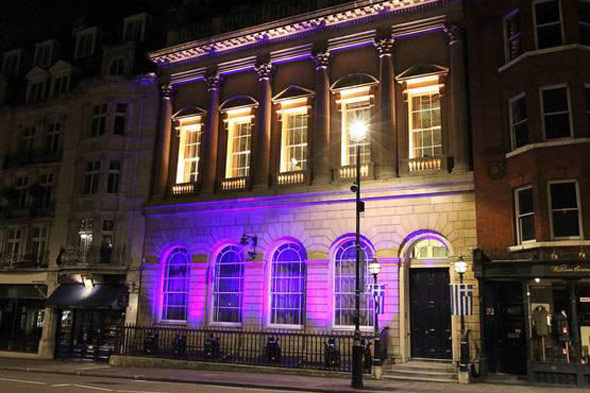
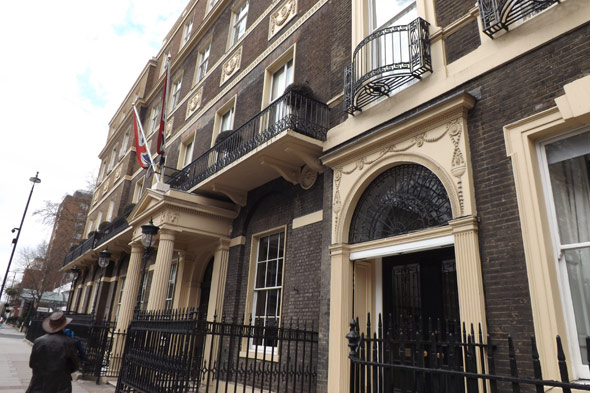


London is extremely attached to literature. The literature inextricably linked to their authors, and authors to their clubs. London's history is ancient, full of stories, Souvenir, ornaments and buildings of the past, a past that can not detach from colonies around the world, colonizers and colonized, explorers and adventurers. Explorers of the stature of Livingstone, writers like my dear Anthony Trollope or the very Dickens They needed a good gentlemen's club to have a beer. The history of London clubs, drawn from the lists of its members, of the betting books and the enigmatic records of committee meetings, is the social history of the English upper class of the last four centuries.
Distinguished gentlemen used to meet in taverns calls until, in 1659, the Earl of Oxford, Aubrey de Vere, decided to call clubs. In these places gathered at candlelight, mainly focusing, drink and gossip. They were private clubs. Later came the public clubs, the pubs, public places where anyone could grab a beer or cider.
The history of London clubs is the social history of the English upper class of the last four centuries
It was in 1693 when an Italian known as Francis White, whose real name was probably Francesco Bianco, founded The White Chocolate House a St.. James Street, what is known today as Boodle´s. It was a real social center for men influenced Meeting, including political, entrepreneurs, adventurers and writers. Soon, the issue of membership in such clubs became a hereditary privilege or special favor. You had to be "someone" or have good connections to join the club.
In order to meet the aspirations of such men, the nineteenth century produced a handful of such clubs, each more grandiose and solemn. Many of these places are preserved and even today most are private. They are mysteriously closed to the public and nothing on the outside makes sense the secrets and luxury in their walls.
Trollope's literary work is the essence of Victorian England
Me imagino Anthony Trollope, whose literary work is the essence of Victorian England, long and parsimonious volumes that account for social media in detail models of the time, resting on a table of these clubs thinking about his next character. Perhaps it was in one of these places where he invented the ruthless Lizzie from The Eustace Diamonds. Trollope is a time and a work that fascinates me and what, after reading, I had the feeling of beginning to understand a little the incomprehensible nature of the English man. In his novel The children of Duke, Silverbridge asks his father if he ever has been in the Beargarden Club:
-"Never"- says the Duke
-"Come and dine with me."
-"I am not a member of the club."
-"We do not care. One can take whom he pleases ".
-"Would not that make him a promiscuous?”.
-“No, I do not think. Works great that way. I dare say there are some scoundrels occasionally. I do not know when one is not rogue.
-"The House of Commons is full of them."
The pace of modern life in London has transformed this pulsating city but has failed to delegate the magic of these clubs, that despite the risk of losing its raison d'etre, still provide an appearance of exclusivity. Its members cling to their traditions, are selected from each other, thank the club are comrades, share friendship, sense of humor (English, of course) and a way of seeing the world. It is in these places where the inherence of the brutal contrasts of this country remains. Wherein a perceived London, and the few Englishmen who are in it, cling to their glorious past with tragic, elegant and somewhat comical determination.
The pace of modern life in London has transformed this pulsating city but has failed to delegate the magic of these clubs
A good club is much more than just a place where you take something, is a refuge from the vulgarities of the world where no one drinks coffee cup
plastic logo Starbucks, but porcelain Worcester, and sugar served with silver spoons. No cockney but rather speaks with the accent of the monarchy, slow and stretched. A club named the Reform or the Garrick, the Home House or the Soho House, in the private, well worth a stop in London, always with an old book under his arm Trollope, to get lost between the pages sunk in an old couch.


