




As night falls, Kyoto turned faint like the light of a candle. We went out to walk the streets of the neighborhood of Gion and there the Maikos, Giesha apprentices, They ran from punitillas as if their presence had some clandestine, As if they could not be entirely in a Japan that grows at the rhythm of robot and high -speed trains.
Gion resists the future. It has a river that winds between the lanterns, It has restaurants where they greet you from the door, even without entering dinner, With medieval reverence. Gion has what delighted sites have, Shadows in Rights, Secrets at the end of the street and lovers that one is invented by the corners.
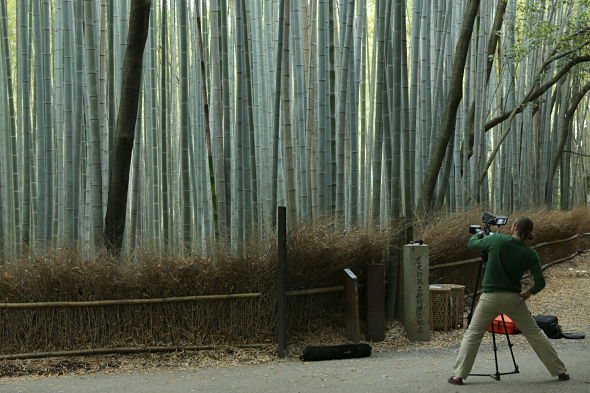
When we move away from its wooden facades, Kyoto returned to the present. The rest of the former capital of Japan does not spare in shopping centers, Verical vertical letters streets and even a bamboo forest where those who lose dignity, Fortune or love, They come to the meeting of death. They say that years ago the forest was full of posters that sang to life, trying to deter suicides.
Years ago the forest was full of posters that sang to life, trying to deter suicides.
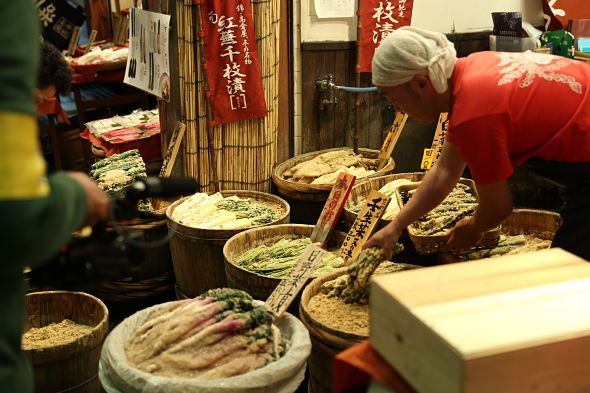
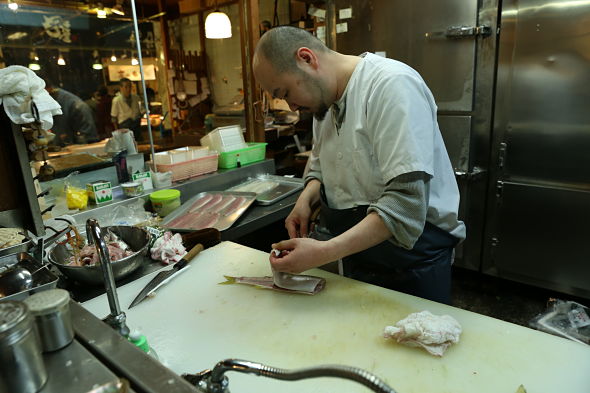
With so much lyrical and such tragedy, The Nishiki market seemed a much more digestible place, although a few hours after being there, I, at least, I changed my mind. We wanted to record that space full of food stalls that challenge the most creative of the gastronomes. A walk through Nishiki can get to make you. I was excited about the idea of ??trying different skewers because pecking in Japan means discovering flavors that before one believed irreconcilable. This is how I tried bamboo with sake sauce, Apple -filled octopus and chocolate croquettes. I also accepted without grinding a kind of eggplant with ginger, various types of sushi, fried hygadites I don't know what, A green tea sweet and a few vessels of aromatic species. Then, We went to eat.
Nacho Melero had photographed until the smell of vegetables and both Yeray and Pablo recorded all kinds of colorful dishes at discretion, But as for the story we wanted to tell in Kyoto, That was nothing more than a slight snack.
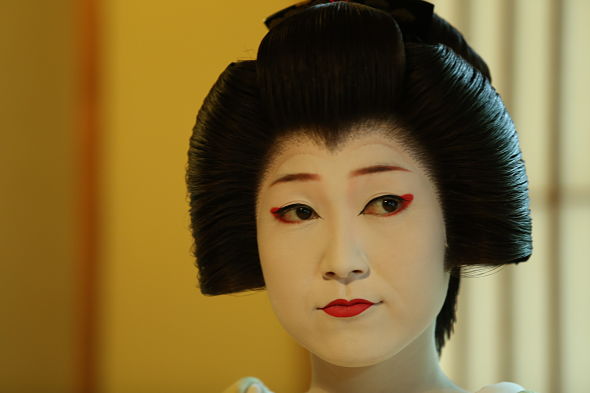
We went to school where they indoctrine to the geikos, which is how geishas are known in the city. There were diaphanous rooms next to careful gardens, All in balance, As we already knew anything there is more Japanese than harmony. Then Kashia appeared. He wore a traditional light green suit, He wore an ungainly hairstyle, A discreet headdress and the painted face of a white angel color. The serenity of his presence left a wake of silences in his path.
He sat where we asked. He made it on his knees, With the torso erect and the arms crossed. There was so much delicacy in his gestures that I feared to break it in a thousand pieces with an impertinent question.
There was so much delicacy in his gestures that I feared to break it in a thousand pieces with an impertinent question
I asked Kashia to look at me. In interviews that require an interpreter, as was the case, The interviewee is usually directed by inertia to the translator, It is uncomfortable to hear from a stranger an incomprehensible language or speak in your language to whom you cannot understand you. With her it was different. I looked at me so directly that I felt seduced and intimidated time. I had dark eyes and seemed to understand me when I asked him if he could get married as a geisha. The security of their answers dissipated any fragility image
-We are not allowed to get married, But I find the right person, would stop being a geiko.
Kashia told me the discipline that is demanded to become a woman of her condition. They must be versed in music and literature, They must dance with ease, Know the protocol in front of the table. His behavior in society must be impeccable, They are prepared if they participate in any gathering and work the art the discretion. All this for what? I wondered without daring to verbalize it. What is the ultimate goal of a gheisa?
I looked at me so directly that I felt seduced and intimidated time.
When the novel "Memories of a Geisha" was published, The controversy shook a certain part of Japanese society. The book describes them little less than sexual slaves and all traditional paraphernalia that surrounds the world of geishas, Some Japanese seem retrograde and repressive. But, Other voices, among them the woman on which the book is based, They argue that there is nothing pernicious at the work of a geisha. Some end up getting marriage to customers, But that seems rather a dowry and not a remuneration for sexual services.
When I asked Kashia about the novel he admitted that he had not read her, I hadn't seen the movie. He said it with the naturalness of those who do not need excuses.
-I don't care what people say. I have dreamed since I was a child to be a geiko. It is a great honor to have this recognition.
And smiled, slightly, with an almost imperceptible pride. Then he gave us his dances, play music for us, He made his reverences and left almost floating.


