


When a young New Yorker named Herman Melville decided to lie to the world's oceans, in part to build their courage and partly to see far horizons, perhaps no idea who started, not only in search of adventure, but began a journey that would culminate in great novel that would be called, years after, “Moby Dick”. It's very American world of pulling it forward in search of one's personality and, in the case of Melville, served no less to be born that, in my opinion, is the best novel of American history with "The Adventures of Hucklerberry Finn".
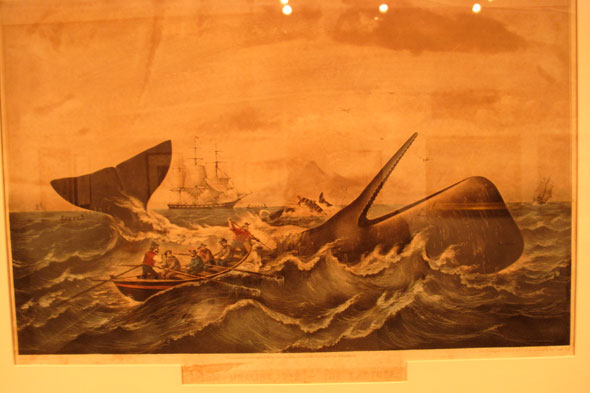
The fact is that the young man went to the city of New Bedford, north of New York, and thence to the island of Nantukett, the two main whaling ports of that nineteenth century in which the oceans were still full of great whales. He embarked as a sailor on a ship and traveled, forged his character and unique lived experiences. Years later, that young sailor Ishmael adopted the name sounds a biblical narrative where a boat, the "Pequod", governed by a frightening and demented Captain Ahab called, viciously pursued a colossal white-skinned leviathan, a sperm whale named Moby Dick murderer. Do you remember, dear readers, the great beginning of the book?: "Call me Ishmael ...".
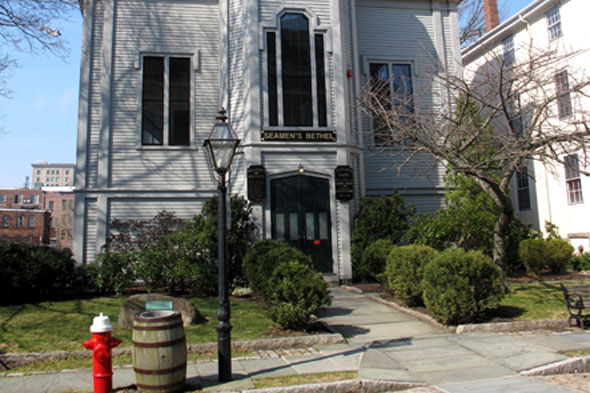
Of course, traces are the words of Melville in some places. For example, in the Chapel of the Mariners (Seamen’s Bethel)
Today New Bedford and Nantukett Island are two beautiful seaside towns where whaling ships no longer dock and yes some flotillas dedicated to other types of fishing. There are two places in a tourist mode, particularly the island, that has an architecture of those days just untouched. And, course, traces are the words of Melville in some places. For example, in the Chapel of the Mariners (Seamen’s Bethel), very close to the docks of New Bedford.
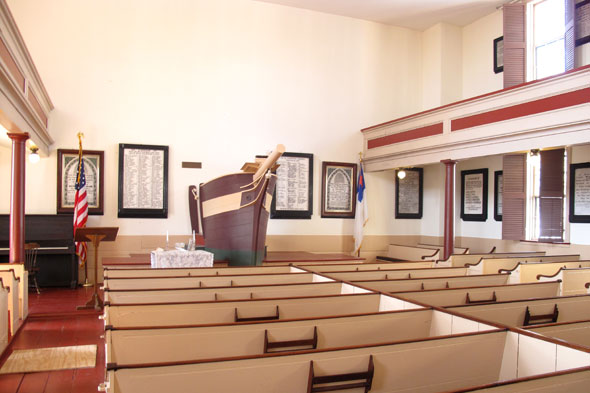
In this small temple, Melville placed the shocking sermon by a priest in referring to the terrible Leviathan from the Book of Job and death at sea. Melville said that the pulpit of the chapel was shaped like the prow of a ship. Y John Huston, when the novel made into a movie, chose no less than Orson Welles to play the angry pastor
The pastor smiled and said: «Melville invented that in his book and Huston filmed it in his film. And as many tourists asked us for the pulpit, Well, we had no choice but to make one."
So, A couple of years ago, when I traveled in those regions, I approached the temple and went to visit. And yes, there was the pulpit as a ship's bow. I made some pictures and, when I was about to leave, I saw entering the pastor who is now at the service in the chapel. I went to ask if the pulpit was the original. And he smiled and said:
-Not, no ..., Melville that invented it in his book and Huston filmed it in his film. As, the same as you, many tourists asked us for the pulpit, because we had no choice but to make one like the film so that people will be happy.
How beautiful it is to see that, sometimes, reality imitates art!


