


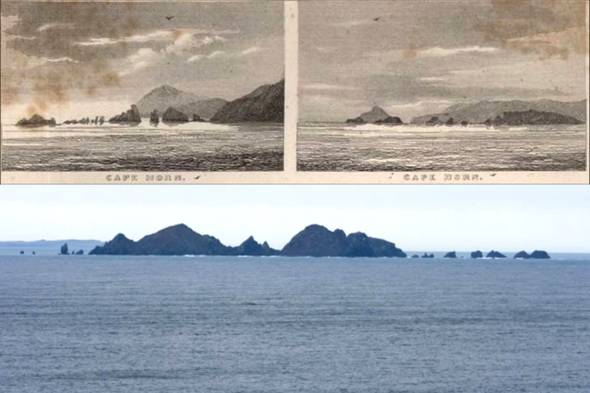
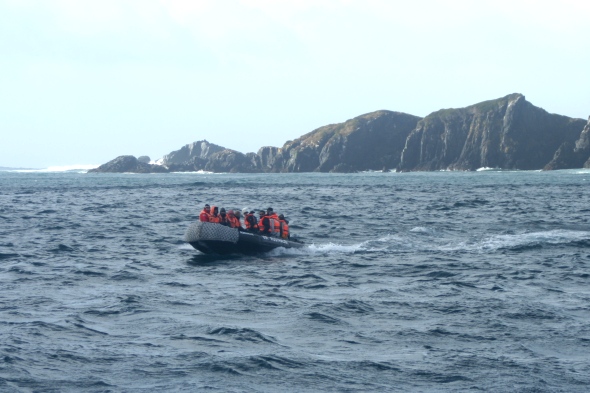
We had to wake up early to have any chance to land before the outbreak of the wind. Standing at the stern of the boat launch expected to return the advance and whether the conditions were to lose. We were a mile of Cape Horn, but it was quite possible that we could not step on.
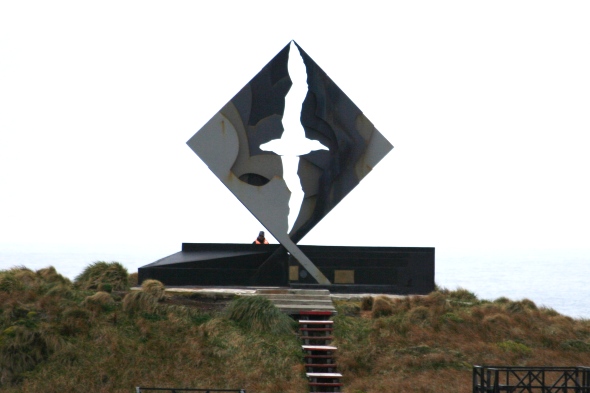
Again I was following in the footsteps of Charles Darwin, the author of the Theory of Evolution, this time on the southern tip of the Americas. The young Charles, aboard the Beagle, had waited several days to land in the same place but bad weather there is very stubborn. Proof of this are the dozens of shipwrecks that occurred in the vicinity. An old legend says that albatrosses that usually fly in the area are the souls of the sailors who perished there. For that reason the image was chosen for the monument albatross Horn, a way to remember those who lost their lives trying to cross the oceans.
He advanced up the boat foam everywhere. "How is?”, asked the boatswain by my side. "Time. Waves and wind. But, when you do not mind getting wet may come "said the sailor. I wanted to go, I would not miss the opportunity to beat Darwin, ¿no?
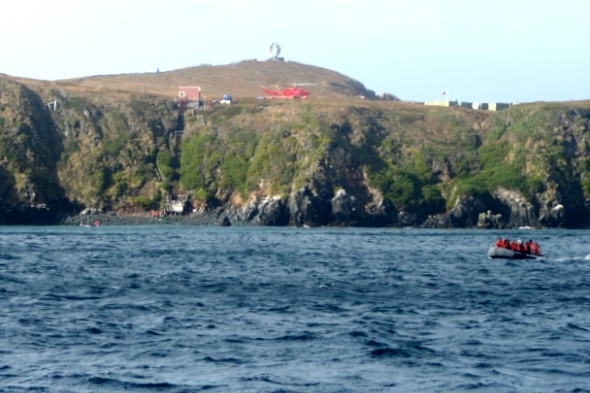
Our boat moved against the strong wind giving panzazos with every wave. We were approaching the coast of the island that is not nothing but a very high cliff
Towards Christmas 1833 the Beagle capeaba a heavy storm to round the Cape and landed a group of seafarers in the Horn Island. A wave near the famous ship bows, so the captain Fitz Roy decided to retire to the nearby island and wait there Hermite best time to return to "attack" the Cape. But it took twenty days without the winds gave him a moment of peace. Fitz Roy decided to leave the Cape for another chance and took the boat, through the islands near, north. His friend ran out of tread Darwin Cape Horn, I.
Our boat moved against the strong wind giving panzazos with every wave. We were approaching the coast of the island is nothing but a high cliff whose feet are huge rocks that have ever fallen from the top. As we approach the wind stopped, were in the shelter of the cliff. Taking advantage of a wave sailor showed his experience to the boat aground in the tiny pebble beach. "Come down before the next wave!"We ordered. Immediately obeyed. We were soaked but healthy and happy to have done.
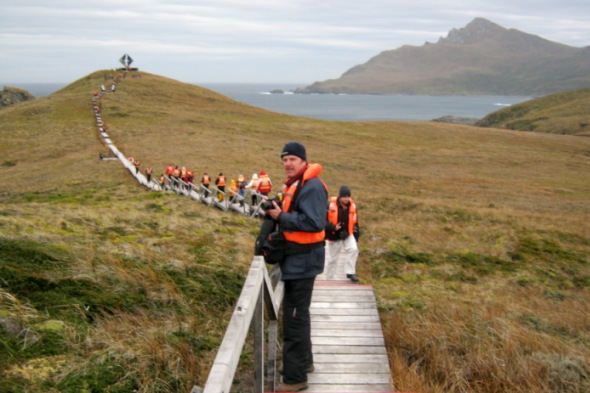
A stair of many flights took us to the top of the cliff where, without the shelter of the wall, We hit an incredible wind. I immediately imagined how bad it would be for a sailing boat facing a storm among the stones fatal. How many were defeated in their attempts to cross from one ocean to another!
Inclement Horn explained why Spain, the Magellan hereinafter, had dismissed as a route to get to Peru and other colonies on the Pacific coast. The path chosen by Madrid American gold was crossing the Isthmus of Panama by mule rather than the galleons will face the dangerous waters of Horn. In contrast, the other English privateers chose this dangerous way to catch and hack the ports of Spanish America.
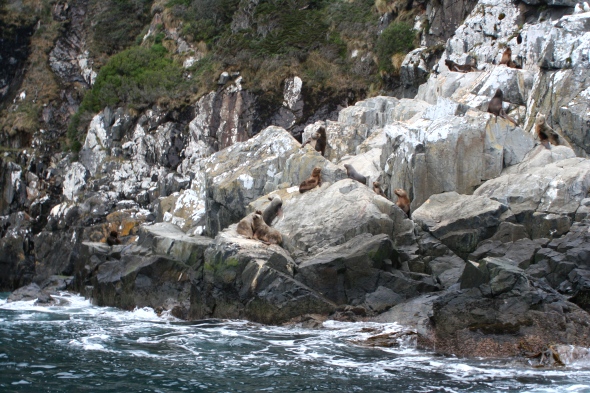
The island has only low vegetation, the only enduring the unbearable wind blowing. But among the coastal rocks, here and there, Some birds nest and roost some sea lions. This explains that even in this inhospitable island live, or survive, some Indians Fuegian. It was hard to understand as their canoes could face a sea so rough. How many of those albatross flew us represent the souls of the Fuegians missing.
Move against the wind for a neat path that protects high creeping plants of the passing tourists and read the plaque that commemorates Fitz Roy Horn in 1830. The captain on his first trip, before traveling to Darwin, had landed at the Cape and even left a reminder. A few years ago, a Chilean navy searched the island and its efforts were crowned with success. Found, on top of the hill, Cape himself, a hole covered with stones. He dug and found a ceramic plate with the inscription "HMS Beagle", a British flag and multiple currencies. It was the "testimony" that Fitz Roy described in his travel memoirs that inspired me to write the story "Testimony" in my latest book.
"Welcome to Horn Island" wife kindly greeted the sailor in charge of the lighthouse
We arrived at the monument of the albatross, from which it has a privileged view of the famous promontory: Cape Horn. Fortune smiled on us and a ray of light was cast among the clouds to give a touch of color to this sad but magnificent landscape. My wife took the opportunity to take great photos. The beam is lifted and stringing steps to rid our Island Lighthouse. A blast we stuck a fine hail in the face. Okay! We could not pretend to have sun and warmth in the Cape Horn. It would be improper!
When you open the door of the box at the foot of the lighthouse went into another world, without cold, no wind, no rain. "Welcome to Horn Island" wife kindly greeted the sailor in charge of the lighthouse. You could hear the background noise of his two sons, a girl and a boy, playing and fighting at a time. The boys are equal to the end of the world. The keeper's family was destined to this remote place for a year of service. Les just missing a couple of months before returning to Santiago.
While my wife sent a postcard to our family from the postal courier, the continent's southernmost, I left a greeting in the guestbook. Suddenly the door opened and looked one of the guides. "The weather gets worse. Captain says we must return to the ship immediately. "Almost jokingly asked if he was referring to Captain Fitz Roy, as if I were Darwin, but I realized it was raining really hard. "The oven is not thought to buns", I told my wife unable to control my terrible sense of humor.
We left in haste. The trail took us next to a helicopter and military containers. The Chilean navy was taking the mines that were placed there in the sad time when our brother countries almost went to war.
We went down the stairs carefully the cliff and we took the last boat. Just turned around a wave drenched me to the teeth. The engine roared but the howling wind was stronger. As we galloped a sea indomitable remembered a sentence from the diary of Darwin. Saying something like: "At three p.m. doubled the Cape but soon after he made us pay tribute by sending a storm right in our teeth." I turned around to give one last look at the legendary Cape Horn.
Contacto@GerardoBartolome.com
Gerardo Bartolomé traveler and writer is. To learn more about him and his work go to www.GerardoBartolome.com


