





I'm sitting on the terrace of a bar Waterside, one of my favorite neighborhoods of Cape Town and has the peculiarity that one part is also the area of ??the city's gay scene. Detail because is the only openly gay neighborhood environment, open and not hiding that exists throughout Africa (Unless specified in a reader, I do not know another where rainbow flags hang on the walls in this continent). Another example that South Africa is more advanced than the rest of its neighbors on social issues.
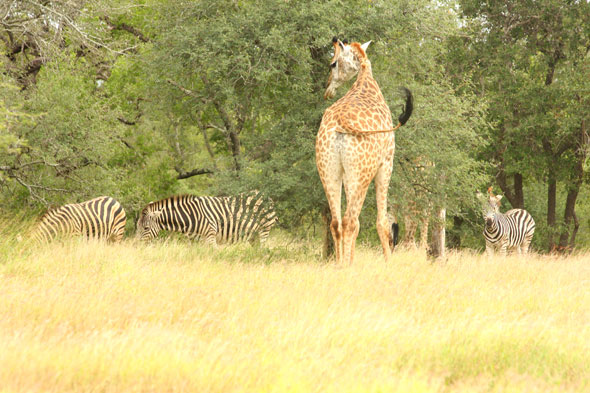
Beside me sits a mixed couple, one black and one white, what catches my attention because one and a half I have been easier to find a zebra and a giraffe grazing together to behold this scene. The look and start to reflect on the most important issue in the country: racism. Mark as solved their future.
I landed in South Africa with racist trial done beforehand and making me an easy composition of place I would make things easier to build relationships: Blacks, noncriminal, Whites are good and very bad. It was so simple to use and was so noted that upon arrival it took me a minute to assert the reality of my mind. Picking up the suitcases had already tens of clues as to write a story. He could write of South Africa, without leaving the airport, and explain that it need not come here to reflect what we already knew 10.000 kilometers. Year and a half months later there are so many nuances that, although it maintains many of the headlines, I recognize that everything I wrote at the beginning is reviewable for lack of information (things of direct). In any case, I will use in mitigation that he was honest.
The Boer people and Mandela
To have my views on this complicated issue will use the protagonists, his words. Several anecdotes that serve to understand the crazed view of pears and apples produced here color version. I remember in Barrydale, the small desert town and area Karoo boer, we closed the night at a bar and there was a conversation with these actors: two young Boer, three major Boer, an English couple drunk and a server. Suddenly, I do not remember the reason, say the two young Boer "Mandela is the most important in the history of South Africa, owe him a lot ". I was shocked, not expected to hear in this town of whites who have retired to the desert to keep the distance such a phrase. The three greatest silent Boer with annoying and youth gesture followed by a conversation that led to the country's identity. No one seemed to speak English until the drunk, which was carrying eight years living here, said: "This country has a unhealthy negativity. You spend on highlighting the problems and talking about their conflicts. It is a wonderful place, where they live in peace, but you are very boring. Me voy a sleep ". He got, his wife collected soil almost, that fell on joining, and went to the room. The rest, Boers and everyone but me, said "right" and five minutes later the British followed suit but without much stumbling.
We (boers) no problems with mestizos, we have always gotten along and respected. With blacks is more difficult, are different
On that same trip to the heart Afrikaner, I ate at home a charming writer, Crhistine Bark Houses, still writing in the language of their ancestors. Travel the world and when he returns to his homeland are held in a secluded farm in the world. "We (boers) no problems with mestizos, we have always gotten along and respected. With blacks is more difficult, are different ", tell me. Are there mixed with mestizos? “No, each has their own way, but there is no conflict ", responds.
The grandmother who preferred not to talk to her granddaughter
Another time, I spoke for a report in El Mundo with several black foreigners who lived in Cape Town. Are they racists in South Africa? Do not forget the response of a Congolese driver is perhaps the best I have: "There are racists all against all". Nor that I gave my good friend Douglas, Bartender Zimbabwe: “I get along better with white, for them I am not a problem. South African blacks are those who hate me because I take my job ". Again the nuances change my initial impression of good and bad.
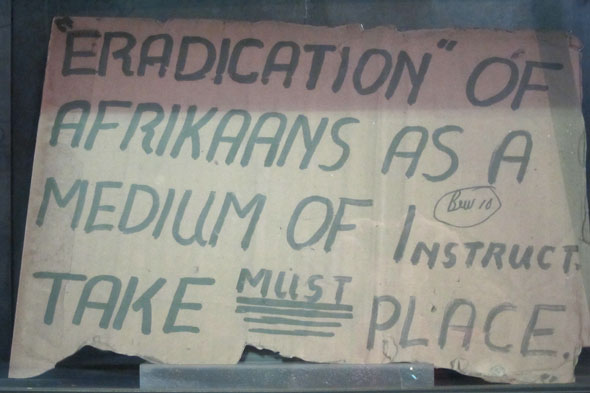
Tell a last resort. I met a journalist whose grandfathers fought in the Anglo-Boer terrible wars of the early twentieth century (whites against whites). She was Afrikaner and their parents, years after the conflict, emigrated to the U.S.. "When I came here on holiday every year I was the favorite of my grandmother, I spent the day with her glued to your lap. We could never speak because she spoke English and Afrikaans and I we communicated by signs. Years after he died, I learned from my parents that it does speak English but refused to use. Several of his relatives died in the horrific concentration camps where the British imprisoned the Boer during the conflict. The amazing thing was knowing that he preferred not to talk to her granddaughter to use the language of the enemy ", recognize me excited.
These examples, are a way of summarizing the crazed South African racial conflict show that was not so simple equation of colors and good and bad. South Africa lives condemned for its racial past but today is an example of tolerance, and analysis, that of xenophobia (nevertheless). No country in the environment has been able to close his wounds well and maintain a reasonable coexistence between the oppressors and the oppressed, none. Almost all passed through the toughest conflict after decolonization, the ethnicity among those released (Zimbabwe, Mozambique, Angola, Uganda, Rwanda…) I hope my next beer in Cape Town called me attention only if the share with a zebra and a giraffe.


