


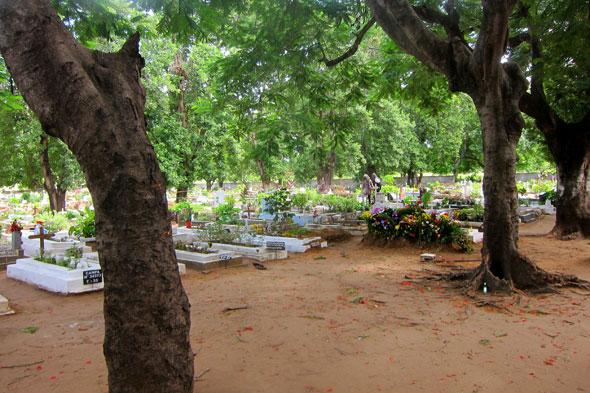


Sunday, 10 March. 11 hours. Tras preguntar in varias personas, perderme y encontrarme, llego to Cementerio de La Matola, about 30 kilómetros de Maputo, Mozambique. El cemetery está vacío. Sólo veo a pareja depositing flores sobre a tumba. No llego to distinguir Cuál de todos aquellos montículos seré el de Mido Macia, el taxi driver mozambiqueño apaleado hasta la muerte en South Africa (el video en el coche y que le esposan to the arrastran por el suelo has nut la vuelta al mundo). Yesterday, en este mismo lugar había cerca de mil personas el atendiendo sepelio. On acababa de cuerpo de llegar South Africa. Había periodistas, political, familiares y curiosos. Hoy no hay nadie, nothing.
Curious idea to have a dignified death in a place that in many cases it is difficult to have a dignified life
I noticed that in some tombs places "reserved". Curious idea to have a dignified death in a place that in many cases it is difficult to have a dignified life. I decide to ask a guy who seems to work in the cemetery. “Sí, I bring ", I indicates, and does so with such sympathy distant Mozambicans seem always to have known you ashamed.
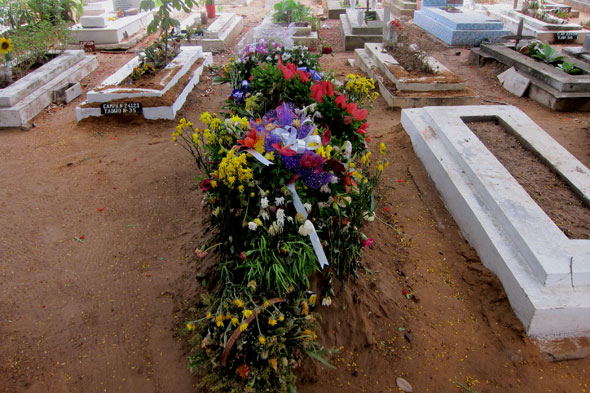
The mound of sand is still wet. (I told her for months as a burial on earth). There are dozens of flowers placed on the grave. There is silence, some cold. Hard to imagine what he suffered Mido, the guy there buried. He was tortured in a vexatious. It is the ultimate symbol of barbarism in the global village. That was yesterday, Today is already forgotten in this world there is always later to turn us all into before. Until all its history filled hours of television, His death has been radiated around the globe. Hoy no hay nadie, nothing.
Hard to imagine what he suffered Mido, the guy there buried. He was tortured in a vexatious
Thursday, 24 March. 11:30 hours. I return to the cemetery in the hope of gathering information to take me to the family of Mido. The flowers of the grave spells start to shrivel. They cover all the grave yet, but the colors have weakened. Has anyone come these days to visit the grave?, ask the cemetery workers. "No", answer. "I'm sure the family will come on Saturday", I clarify.
How much has cost this tomb? » 2000 MZN (50 EUR). It is a large tomb and costs more ". "But this does not have cement, is just dirt ", I point, noting that the graves are based around and slab. "You pay for the space and this is wide", I explain. Do you know where the family lives? "They say that in the Matola River, after the bridge. Go there and ask ". I leave the cemetery and turn right at the door head, I look like with shame, sideways. "Life goes on", tell me, but I think violent silence of the place, of that tomb, a death until nothing has caused so much noise.
"Life goes on", tell me, but I think violent silence of the place
Thursday 24 March, 13.00 hours. A group of agents in the area of ??the Matola Rio works on a routine check of vehicles. A road cones hinder the passage. "Excuse, Do you know where Mido family lives Macia, the driver killed in South Africa?, I ask getting off car. Then begin conversations run. They try to help, respond. Finally, after several comings and goings T decided to accompany me, one of the agents who know the house. Nobody asked me who I am or what I. I simply asked to see the family of Mido and take me to them.
"I was one of the officers who went to the border to pick Mido's coffin", I said the nice T, I explain that I am a journalist. “Ah, journalist. Types also came from South Africa to interview the family ", tell me. T is a young boy who has spent three years in the Corps. How many police sent to Mozambique?”, "We 18 Safety and 10 traffic (traffic). In total there were 28. We had to sleep that night in the border, in Ressano Garcia, and that South Africans had closed the passage. At six o'clock we finally bring the coffin to the Matola ", account. Ironically, or not, the first stop for the first dirge was in a nearby school that bears the name of Nelson Mandela, icon of peace in Africa and former president of the country in which they killed a Mozambican immigrant who opposed a traffic ticket. "There were many people on all sides. It was full on Saturday ", T reminds.
"Are they", T tells me. It is the picture of desolation, of loneliness
Ten minutes later, after crossing a long sandy estrada and bumpy, we Macia family home. There are three buildings in the middle of a gravel area clean. In the center is a bench, Mozambique typical store, where the trade with the rest of the world turned into first needs. To the left is a group of children playing, right to see two older women, very old, dressed in black, his face contorted runs on a mat in the shade of a tree. Following them, two middle aged and middle-aged man sitting in a chair in absolute silence. "Are they", T tells me. It is the picture of desolation, of loneliness.
Very gently we approach. I look with suspicion. But, the man suddenly gets up and brings two chairs. We sat. "T" talks Changana, African language spoken in this area of ??the country I presents. Are the father and mother of Mido?, wonder. “Sí”, answer both with a certain sadness. The third woman is a spiritual leader of his Church that goes every day to give them comfort. I explain that I want to tell the life of your child, what they think, if they aid, what they feel ... The father looks at the sky, sighs and says: "Today I have called the Ministry of Foreign Affairs and I have indicated that I can not talk to anyone without your permission", apologizes. Did the government tells them who to talk to? “Sí”. But have come to see, offered financial aid? "We will not help anything and keep us up now to help us others", Mother intervenes.
I do not want money from the death of my son. I want this to happen and, to forget
"I do not want money from the death of my son. I want this to happen and, to forget ", he claims. "But they could do something, Neither do nothing help at all ", she spits back. "If the government has decided that we should not talk to anyone for nothing", he concludes, in that belief as African when things go no need to ask the reason. Spend, what wonder nothing. "Just tell me how is your grandson", asked. "He is with us", He politely answers, while his eyes seem to indicate that one of the kids playing on the other side of the house. I know the conversation, in that tone, can be eternal. They will never take, not going to stop answering my questions. For culture would not. In any case I decide to go to not get them into a bigger problem, to respect the weakness with which he has told me it is better to do, I leave.
"I get lucky and my sincerest condolences", I leave shaking hands. "Thanks", they respond with their fingers of clay as ashamed of not having served as is usual in this land, with everything you have if nothing. Gone are those two older women, dressed in tight black and piercing eyes that now with the sun's reflection seem deeply moist. Their eyes are deep, strange. Nothing, no people, no forgetting and silence. Mido's death is because only that, oblivion. No more time for him in life.
PD. Part of this text was published in The World. Mozambican newspapers this week reported that his Government pressuring parents to withdraw the lawsuit against the South African Police. The photo of the grave is the first time you publish, I guess, on a European average.


