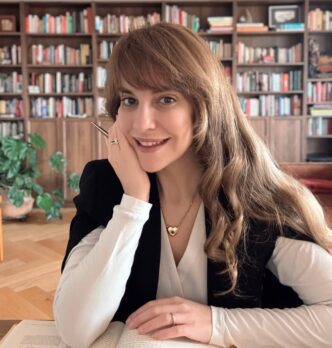
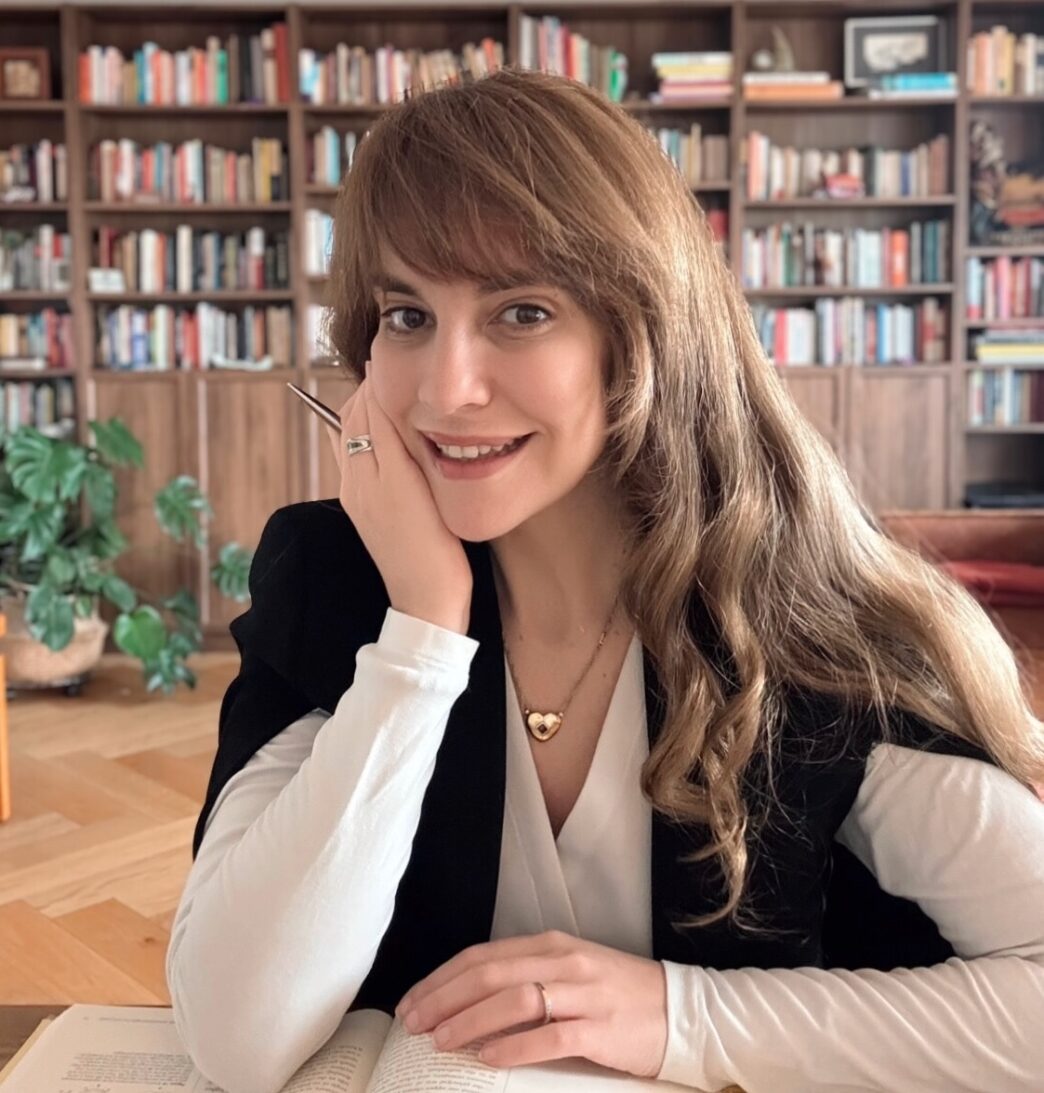
Maria Ferreira, analyst in conflict zones, carries out a doctoral thesis on international security, advisor on medical and humanitarian missions, journalist and writer, he has two centipedes in his hands, That's why he writes as if he were walking on soft asphalt.. There are own letters. little happens, but it happens with her. You read something and say "this is from María". And you get that calm and restlessness that their texts transmit in which they always talk about love., but always from a place where pain also creeps in.
Mary, That is evident in every paragraph of his writings., love a lot, and when you love a lot, love stings something. And Mary loves the world; and on top of that it gets into your bowels, where it smells like chloroform and garlic, and life breaks down during breakfast. As Elena Garro said in her book The Memories of the Future "not all men reach the perfection of dying."; There are dead and there are corpses. Corpses are something else, and María sometimes sees them, and writes down their numbers and names in their notebooks during work trips., and right on the margins, to survive the silence, write about everything else.
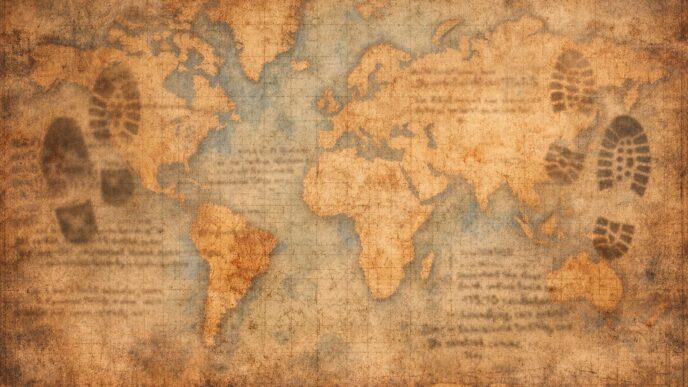
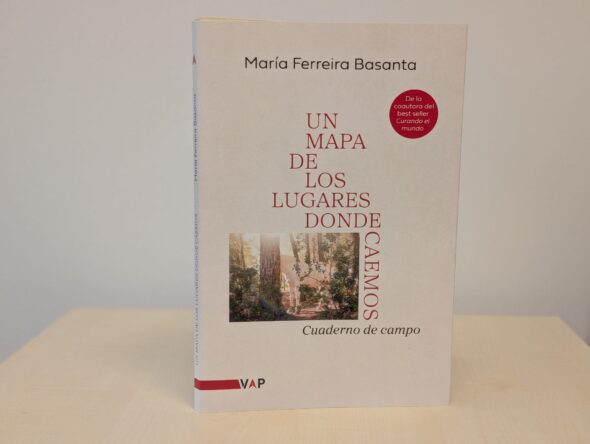
And in that rest there is another world where children play with pigeons, in cemeteries there are sheets and flower pots, prayers are homeland and longing, neighbors complain about the smell of spices, friends hide their desires, Greed blocks marriages and grandmother is the sea. The result of this tornado of life spread across the globe is this wonderful work titled «A map of the places where we fall», which has been in bookstores since 19 February.
Mary loves the world; and on top of that it gets into your bowels, where it smells like chloroform and garlic, and death breaks down during breakfast
A necessary book to remind us, especially in these dark times, that life always wins even if it is so necessary to denounce its defeats. And this work is that, the collateral turned into essential. What happens in the second 11, orchestra percussion, the shower after sex, the fruit when it appears. because the world, in the middle of all that chaos of crows and candy, always offers a refuge and Maria, tells the book, he obfuscates in inviting us to enter him.
I have spoken many times with María to move forward with this project.. Out of loyalty, she insisted that I go here, and on that journey it turns out that she has ended up being here, because you can't be from the outside when you are so inside. Read this magnificent book, You can hear the sound that water makes before it goes down the drain.
and maybe, to understand it better, you should know the author. This is your voice, and these are some of his reasons for creating this work.

-What did you want to tell with this book??
-It is a book about my way of being or falling in different places in the world.. Sometimes they are pieces of love letters that I would have liked to send, sometimes wishes in the air, sometimes confessions.
–This is a book that is built with the marginal notes that you make on the ground in the field notebooks that you have for your research on conflicts or complex international realities.. In a bombed zone, or very poor and miserable… there is room to love and hate in a “normal” way, or between pure survival there is barely room for anything?
-It scares me that there is no room to love and hate in our apparent normality.. I can only answer this question from my own stomach., in a very limited way and from a hypothetical case: I think, in my case, survival would not be incompatible with love or hate. Of course not.
–When horror breaks out, Does the best or the worst come out in human beings??
-Human beings are capable of both.. I guess it depends on each person's personal privilege and values.. The ability to help that a person who maintains a certain stability within the horror has is not the same as that of someone who has lost everything..
I believe that horror does not create anything new: It only exacerbates our duality and takes us to the limit of what we are and what we are capable of doing to save our lives and those of our loved ones..
–In the text you go from your city in Germany, to Israel at war, relations with your in-laws in Pakistan, parties with luxury prostitutes in Dubai, to look at the sea with your grandmother in Puente Mayorga, to almost die in Malawi, or to witness the cruel heartbreak in Kenya. Can you be the same Maria in all those places, or you mutate and need to adapt to each space to “survive”?
-It was Javier Reverte who gave me precious advice more than fifteen years ago: "Always observe, But be careful what you absorb.". So that's what I do. I observe and respect, But I know what my limits are and I know how to get home.
–Your book talks about love, sex, of hate and sorrow, of various gods... in many places and many parts. Do the individual circumstances of our lives outweigh, or the social environment for our way of understanding and relating to the world?
-Both, depending on the degree of freedom we enjoy and the ability to detach ourselves that we manage to have. My culture and my experiences limit me and, at the same time, help me grow; It is my duty to recognize that limitation and be grateful for the richness that my cultural context gives me..
that the culture, religion, society and everything that happens to us shapes us is undeniable. Now, What we do with all of that is a matter of privilege and is deeply individual..
–Because of your job, you must talk to people who you know sometimes commit atrocities or who support and justify them.. In the book you describe a moment where you feel close to the person and rejection by the character.. How do you approach that pain and come out unscathed??
-We all sometimes have to face unpleasant situations or deal with people we hate.. I don't come out unscathed. sometimes I get angry, and then I have to figure out how to manage that anger..
Sometimes my friends suffer from my audio-podcasts, shitting on the saints of someone or some situation. And that's it. There's not much epic in that..
–You talk a lot about the Muslim world in the book. What do we not understand in the West about that world, and what they don't understand about “ours”? Talk about the Muslim world, how to talk about the western world, Is it a simplification or do you find validity in it??
-When I talk about religion, and specifically Islam, I always do it from a concrete experience: that of a character or my own. I am not talking about “the Muslim world.”, in the same way that I do not place myself in “the Western world”, as homogeneous entities.
in my life, and also in my Muslim in-laws and in my Catholic family, very different ways of living faith coexist: people for whom religion is an intimate space that helps them sustain the weight of the world; others who live it in a more cultural or superficial way; and also those who turn it into an identity flag. This happens in all religions and in all contexts..
Islam is very present in the book because it is part of my life, not because I am interested as a reducing category: I talk about the Islam of the people I describe, and that's as far as it goes. How my people live religion affects me because, sometimes, very directly shapes relationships, the affections, tensions and the way we express affection. Talk about the “Muslim world” and the “Western world”, also, It seems to me to be a reductionist label and not very useful for understanding how people really live..
What I do see, and that runs through the book, It is the enormous facility that human beings have to convert difference into militancy and identity into a border.. some families, some environments, They let themselves be carried away by that separatist drive. But when I talk about it, I always talk about characters, of specific links, and not of entire groups, because this book does not pretend to explain a world, nor is it a book about religion or geopolitics: It is a book about how I experience different situations from the inside, with all its contradictions.
–You talk about your Pakistani in-laws., of that house where women live on one side and men on another without contact. And you describe your effort to adapt and understand that reality. How do you think they see you?? Is there a profound way to communicate between two such diverse worlds when the door closes and you are left alone??
-My relationship with my Bahawalpur family is a love story. I love them and they love me. I am the guest in your house and I try to be as respectful as possible., knowing that I'm probably clumsy at times. I don't know how they see me, but I know that respect and affection is mutual.
–Are you loved and hated differently in every place you pass through??
-If we talk about the expression of emotions, of course it changes. If we talk about love and hate itself, I can only say that I love and hate differently depending on the time of the month I am in., or how many days it has been without seeing the sun in the damned German winter.
so yes, love and hate change all the time. It's an exhausting thing.
–After having lived and seen so many things, what are you afraid of?
-I'm afraid that the people I love will suffer.. Fascism scares me. Goodism also scares me. Silence and apathy scare me. And I'm afraid of the gastrointestinal viruses in my daughter's school..
–What map do you need to carry in your pocket so as not to get lost??
-The one of love, clear. In all its forms. And know that it is a unilateral decision: that one can love very much and very strongly without expecting anything in return.